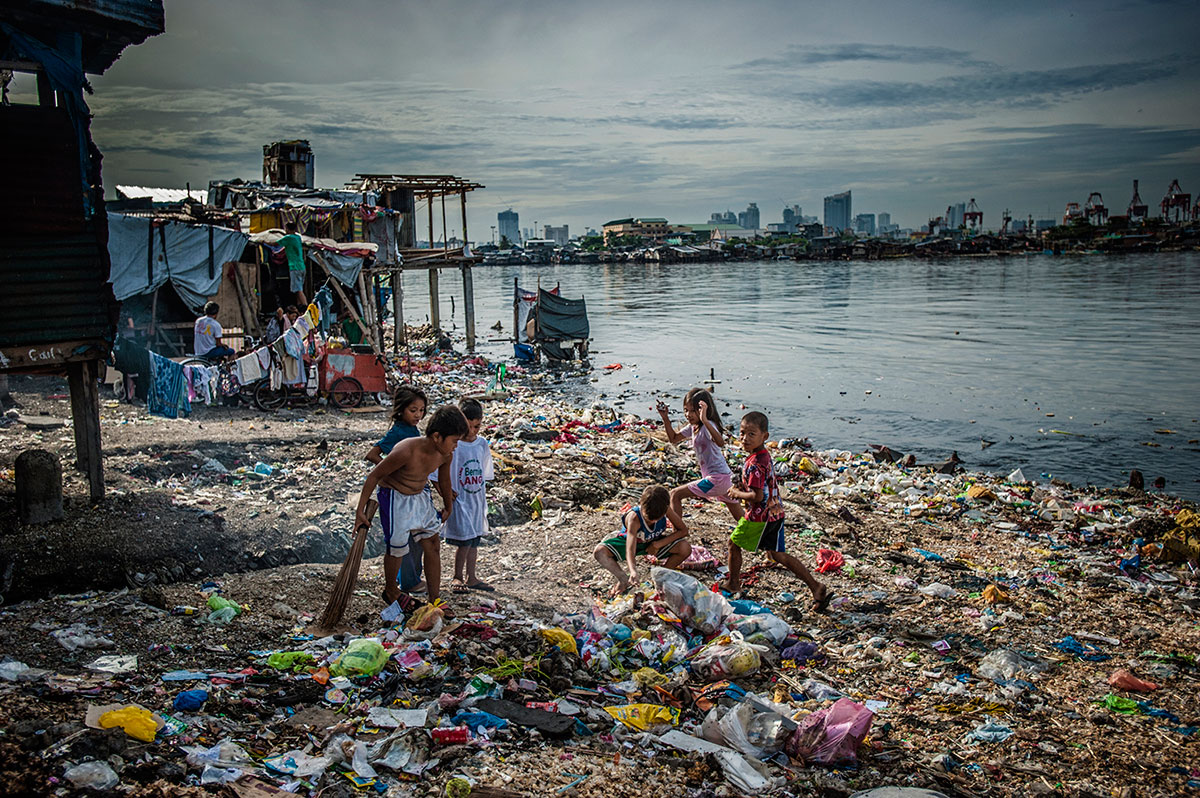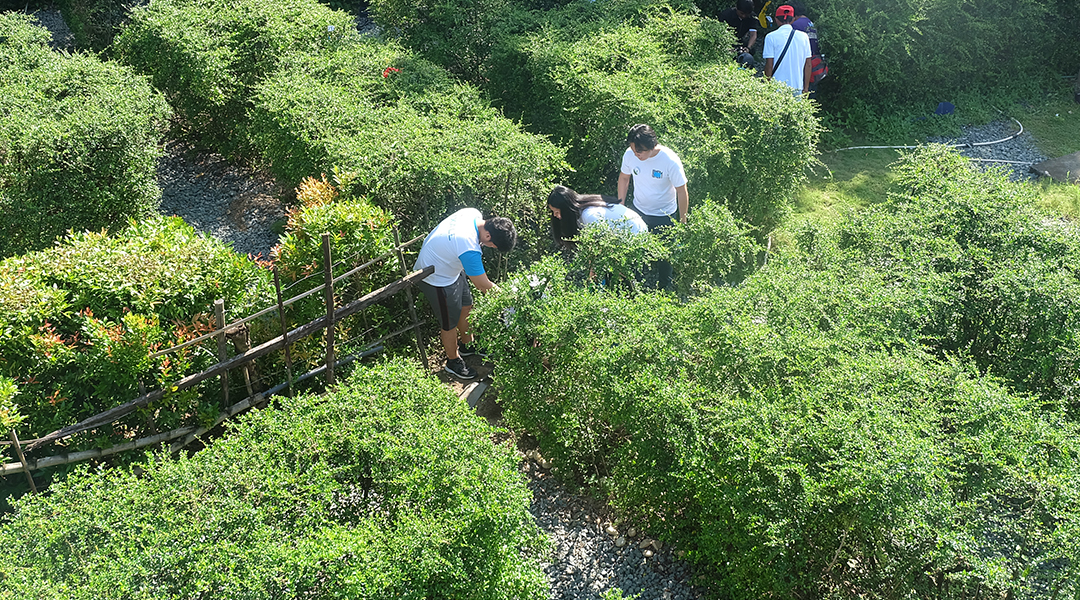
Co-producing a resilient city: The Pasig Green City Program

As we come to see the urban as a political ecology structured by human and material flows and their governance, the catalytic effect of urban density constitutes an insightful starting point from which to reflect: the intensities and complexities induced by urbanization generate both unique potentials – including the concentration of means enabling innovation – and great challenges for so-called ‘megacities’ in the Global South. According to Price (2006), nature in the city can be seen as “a landscape and ecology we build in and manage”. Within the ever-changing and incontrollable metabolism of the so-called ‘megacity’, ensuring that the city’s benefits are distributed equally among citizens is not an easy task (Porio 2012). Urban governance is therefore determinant for Manila’s capacity to manage major issues through inclusive development.

Multi-actor development in Manila

The People Power Revolution marked a turning point in in the progressive shaping of today’s political decision-making systems: under Martial Law (1965-1986), illegal settling was punished by imprisonment in Manila (Bello et al. 1982). Informal settlers were forced to organize into People’s Organizations (POs) to defend themselves for evictions and convictions.  These POs were at the forefront of the peaceful People Power Revolution, which overthrew the undemocratic regime in 1986. Civil society was therefore acknowledged a legitimate role in political life in the country’s 1987 Constitution and other key legal texts (Shatkin 2007: 28-33). As a result, the Philippines is the country with the most NGOs and Community-Based Organizations (CBOs) per capita. There are over 2000 CBOs in Metro Manila today (Shatkin 2007: 2). Civil Society actors are granted 25% of the seats in the legislative bodies of each level of government (region, city and barangay) and their active role as mediators between the people and public authorities is widely acknowledged (Lobry, 2020: 11-12).
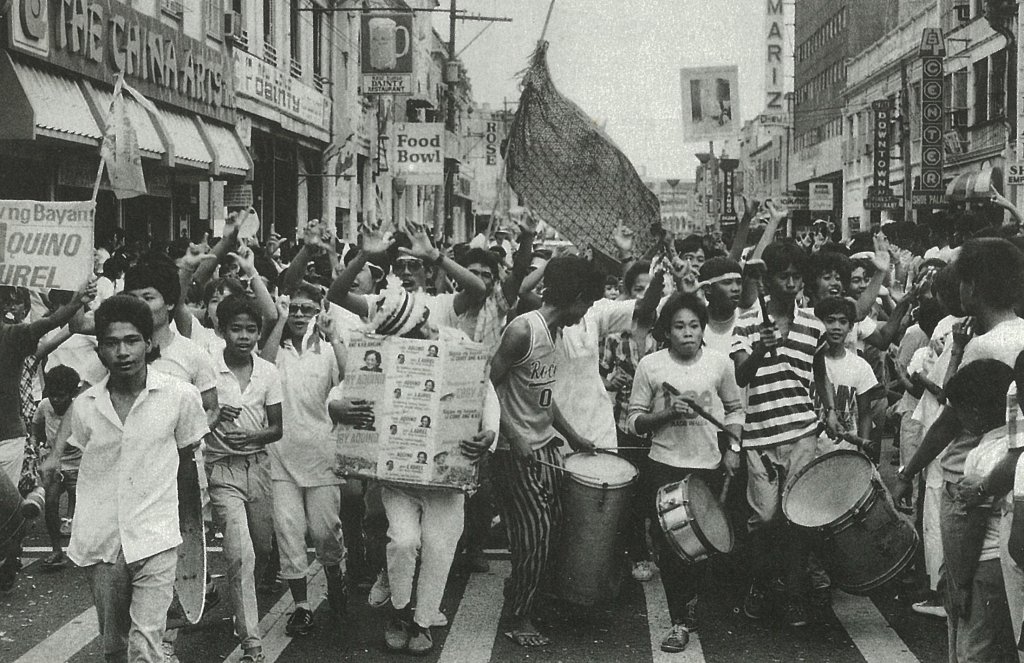
The People Power Revolution (1986)
Source: The Philippine Canadian Inquirer, 2016

We have already stated the excessive privatization of urban services in Manila, as well as the lack of access to land and water for its poorest inhabitants. Yet Manila’s tradition of participatory governance may have the potential to help Manileños achieve inclusive, resilient development.

The Pasig City Green programme

The Pasig Green City Programme is a regional model for co-production and participatory urban governance. Pasig is confronted with Manila’s common resilience challenges including the prevalence of flood-prone areas and a rapidly-growing population. In 2009, after Typhoon Ketsana submerged 70% of the city, the mayor put an ambitious resilience agenda in place.

Collaborative Governance in the Pasig Green City Program
Source: Porio 2012

First, a disaster risk reduction and management program trains citizens in rescue and risk reduction in the case of a flood. In coordination with local CBOs, the city created community-based volunteer groups like the Tanod Sapa team, in charge of river watching (Porio 2012: 21). These groups are part of a complex scheme involving significant financial investment from the city into innovative disaster risk reduction technologies. The operational teams and supervising agencies are equipped with technology including GIS map-guided systems, GPS tracking, and weather monitoring for the city to respond as fast as possible (UN Climate Change).

Importantly, the disaster risk reduction and management program is integrated into a comprehensive Green Agenda promoting inclusive sustainable development. Pasig City is working closely with the ICLEI, a network of environmentally committed cities to “develop and deploy bottom-up models of climate action planning”. A continuous consultation process is in place thanks to a feedback mechanism: on “People’s days”, all residents are invited to make comments, complaints and suggestions to public officials (ICLEI 2019). Throughout the process, citizens feel empowered to implement their own projects and have their say on the ongoing initiatives. The resulting sense of ownership further enhances the citizens’ commitment to the Green Agenda (UN Climate Change).

The Pasig Community Bus Service
Source: ICLEI 2019

The project expands to education: the Greenheart Savers Program raises awareness among the youth in 32 public schools. Pupils are encouraged to bring their recyclable waste to school through a system of rewards. Lastly, Pasig City encourages green mobility through various systems. These include elevated walkways to tackle Metro Manila’s poor walkability (GIZ 2016), the ICLEI-lead Pasig Green Bike Share Program and carless weekends in certain areas of the city (ICLEI 2019).

From Resilience to Thinking and Living Green

Pasig City’s green agenda emerges as a model for the entire agglomeration. Not only are environmental issues managed collaboratively, they are also continuously co-produced. As a result, more than a resource “especially dangerous to lose track of”, nature is increasingly considered by both citizens and government officials as “a premier source of human meaning” (Price 2006). Pasig City residents allegedly “think and live green” (Philstar 2009).
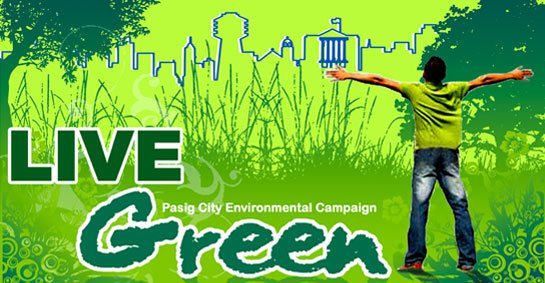
Pasig City’s Green Campaign is a crucial part of its inclusive development agenda
Source: Facebook, Pasig City

As Pasig scales up its solutions, it faces major challenges in Metro Manila’s pyramidal governance system: Municipalities are loosely coordinated, partly due to the weakness of the over-arching Metro Manila Development Agency (Boquet 2014). As a result, Pasig City’s public bus lanes and bike share system brutally stop at the municipality’s borders, thus limiting the positive impact of the Pasig green City Programme in the agglomeration.

Wordcount: 824

Resources used:

Featured image: Agricultural Training Institute. (February 21, 2019). Expansion of Green Communities in Manila Continues. Retrieved from: http://ati.da.gov.ph/ati-main/news/02212019-2013/expansion-green-communities-manila-continues

Bello, W. F., Kinley, D., & Elinson, E. (1982). Development Debacle, the World Bank in the Philippines. San Francisco: Institute for Food and Development Policy.

Boquet, Y. (2014). Les défis de la gouvernance urbaine à Manille. Bulletin de l’association de géographes français, Géographies, 91(91–4), 461–478.

Brillantes, A. B. (1987). Decentralization in the Philippines: An Overview. Philippine Journal of Public Administration, 31(2), 131-148.

Cheema, G. S., & Rondinelli, D. A. (1983). Decentralization and Development: Policy Implementation in Developing Countries. Beverly Hills, CA: Sage Publications.

Capuno, J. J. (2011). Incumbents and Innovations under Decentralization: An Empirical Exploration of Selected Local Governments in the Philippines. Asian Journal of Political Science, 19(1), 48–73.

GIZ (Deutsche Gesellschaft für Internationale Zusammenarbeit) (2016). Transforming Public Transport in the Philippines. Eschborn.

ICLEI (10/09/2019). Pasig City, Philippines demonstrates the benefits of inclusive climate action. Retrived from: https://talkofthecities.iclei.org/pasig-city-philippines-demonstrates-the-benefits-of-inclusive-climate-action/

Ishii, R., Hossain, F., & Rees, C. J. (2007). Participation in Decentralized Local Governance: Two Contrasting Cases from the Philippines. Public Organization Review, 7(4), 359.

JICA (Japan International Cooperation Agency). (2014). Roadmap for transport infrastructure development for metro Manila and its surrounding areas (region III & region IV-A) in the Republic of the Philippines. Japan International Cooperation Agency: ALMEC Corporation.

Kang, D. C. (2002). Crony Capitalism: Corruption and Development in South Korea and the Philippines. Cambridge Core.

Lobry, F. (2020). Rethinking the Entrepreneurial City: Local Government Executives and Collaborative Governance in Metro Manila. University College London: Bachelor Dissertation.

Philstar (15/12/2019). Pasig City: Thinking and living green. Retrived from: https://www.philstar.com/lifestyle/health-and-family/2009/12/15/532197/pasig-city-thinking-and-living-green

Porio, E. (2012). Decentralisation, Power and Networked Governance Practices in Metro Manila. Space and Polity, 16(1), 7–27.

Price, J. (2006). “Thirteen Ways of Seeing Nature in L.A.” Believer Magazine. Part 1 available here: https://believermag.com/thirteen-ways-of-seeing-nature-in-la/

Shatkin, G. (2007). Collective Action and Urban Poverty Alleviation: Community Organizations and the Struggle for Shelter in Manila. Aldershot: Ashgate.

Smoke, P. (2003). Decentralisation in Africa: Goals, dimensions, myths and challenges. Public Administration and Development, 23(1), 7–16.

UN Climate Change. Pasig City – A Smart City with a Green Heart – Philippines. Retrieved from : https://unfccc.int/climate-action/momentum-for-change/activity-database/pasig-city-a-smart-city-with-a-green-heart
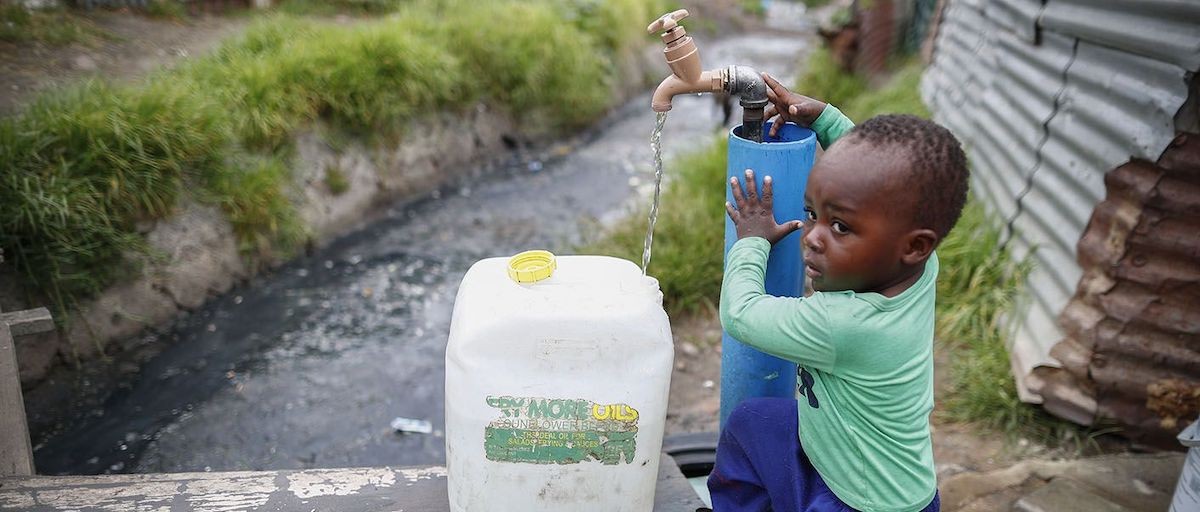
Water at Risk: Who is Guilty? Who is Victim?

SDG 6 targets “universal and equitable access to safe and affordable drinking water for all”. However, rapid urbanisation in coastal areas of developing countries combined with increased water use have become an issue for both water availability and quality.

In the region of Dakar, nearly “80% of water resources”, including drinking water, “come from groundwater sources” that extend over a large area in the suburban zone of Thiaroye, in Pikine (Re et al., 2010). These reservoirs are mainly part of a vulnerable unconfined aquifer (Diédhiou et al., 2011) that is increasingly affected by overexploitation, salinisation and anthropogenic pollution. Without adequate protection and long-term management, the water is declining rapidly and probably irreversibly, with a critical impact on ecosystems and human health.

By the 1980s, the water sector of Dakar had to provide increasing volumes of water in a situation of inadequate resources and infrastructures. Ineluctably, local water sources were insufficient and polluted, while population growth and agricultural and industrial development required more and more water. The government subsequently adopted a reform in 1996 that is presented as an environmental and social success by the authorities and the World Bank.


Yet the depletion and pollution of water resources proceed at an accelerated pace since the reform, while social inequalities remain.
First of all, “the continuous overexploitation” of groundwater increased its mineralisation and produced a decline in its quality, “with important drawbacks on health and agricultural development” (Re et al., 2010).
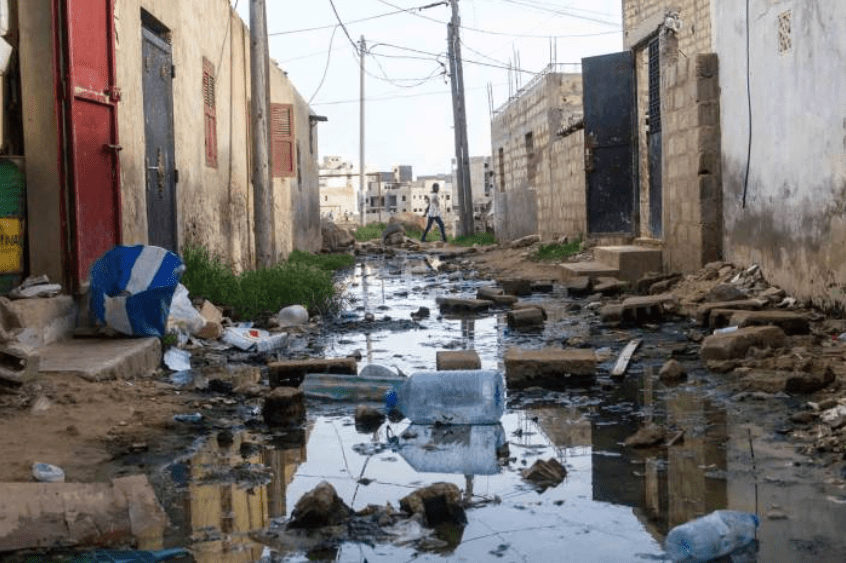
Moreover, the pressure on already insufficient sanitation infrastructure, especially sewage drainage systems, is one of the major sources of groundwater pollution in the region of Dakar. In some municipalities of the region, “most houses are equipped with improper septic tanks”, leaking into the groundwater (Re et al., 2010).
Furthermore, a large part of the population uses pit latrines and dumps waste, increasing pollutant concentration in water and significantly affecting seawater. Contaminated by discharges of wastewater with high concentration of trace metals, seawater then intrudes into groundwater (Diop et al., 2012).

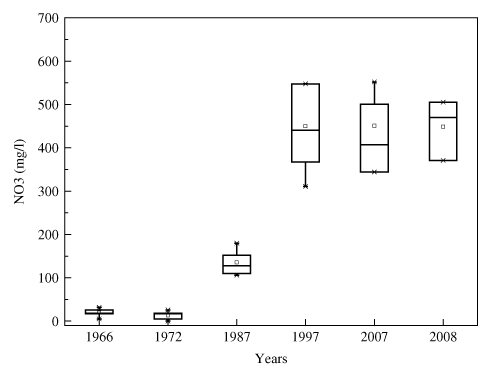
In addition, agriculture and industrial activities are main drivers of the severe nitrogen contamination of groundwater. In Thiaroye, concentrations of nitrates close to 1400 mg/L have been measured (Diédhiou et al., 2011), whereas the drinking water limit is fixed at 50 mg/L by the WHO.


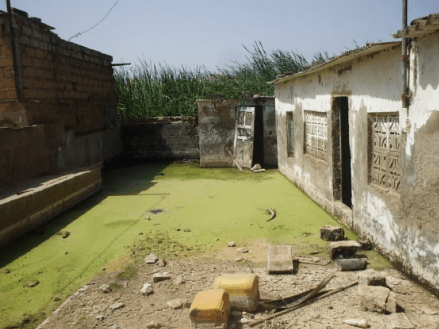
This deterioration of groundwater is primarily due to the high permeability of the aquifer and the proximity of industrial sources of pollution. At present, due to the high pollution level in the suburban area, many wells are closed, resulting in lowered pumping rate and thus recurrent flooding through rising groundwater table.

Nevertheless, many boreholes pumping in polluted tables still feed the distribution network of Dakar. This contaminated water “is officially diluted with better quality water”. For instance, “at the Thiaroye plant, water from the Thiaroye and Sebikotane tables is diluted with water from the Lake of Guiers” and clean tables (Theven de Gueleran, 2012). However, there is not any control of proportions, while the priorities are satisfying demand and ensuring pressure, leading to the absence of dilution at peak hours. Polluted water is therefore directly spilled into the network and ineluctably received by the poor peri-urban neighbourhoods which are closer to the boreholes.


From an environmental standpoint, water sources are now so polluted that they are mostly lost or so overexploited that they cannot renew themselves.
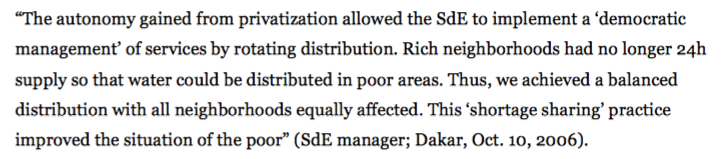
From a social standpoint, “access to drinking water increased from 79% in 1996 to 91% in 2006” in the Dakar area. Nonetheless, the reform left the low-income households with “unaffordable, insufficient and low quality supply”, in comparison with wealthy areas (Theven de Gueleran, 2012). Indeed, price increase and distribution in priority to zones with high demand leave the poor areas with irregular supply, low water pressure and polluted groundwater, while they cannot compensate availability problems with adequate storage and filtration.

In a nutshell, the water sector reform is not a success for everyone, especially not regarding environmental issues and social inequalities, since its worst effect since is to encourage the use of polluted underground water.

Water shortages and challenges in Dakar

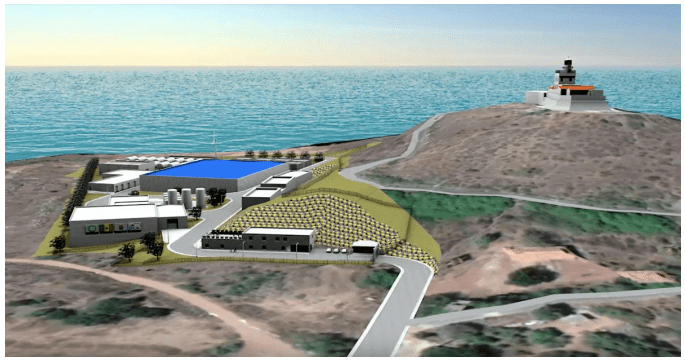
Nowadays, the Senegalese government wants to turn seawater into freshwater with the construction of a desalination plant on Les Mamelles beach, threatening ecosystems (Liu et al., 2013).


But instead of looking for new sources of freshwater, projects should focus on improving the quality of already available water through the development of treatment systems and sanitation facilities.

Barcelona and the ‘smart city’

As the world becomes more urbanised, cities are becoming smarter to deal with the complexities of urban life such as overpopulation, energy consumption, resource management and environmental protection. Gaining traction over the past decade, the ‘smart city’ concept has now become popular among policy makers, urban planners and academics alike.  

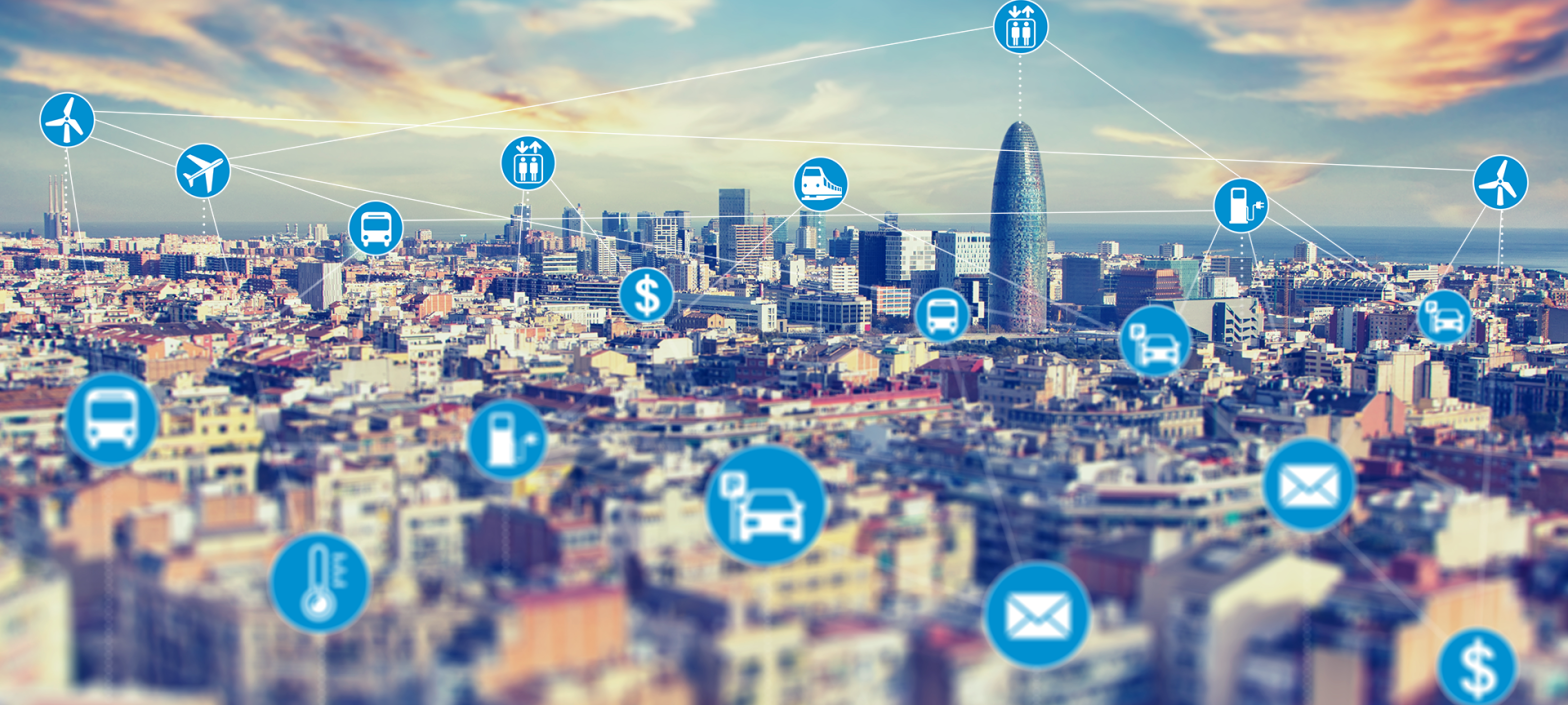
A key part of being a smart city is incorporating new digital technologies to improve the quality and performance of urban services to benefit residents. Barcelona has incorporated smart sensors and data analytics across the city from parking and transportation to waste collection and air quality.  

Although the idea of the smart city is relatively new, it has evolved from its initial conception. The original smart city was characterised by top-down, technology driven decision making. This then evolved into a more bottom-up approach, with technology driven by the demands of citizens. Finally, what Barcelona calls the Smart City 3.0 has emerged: linking citizen participation with both government aims and new technologies. The key principle behind this is the development of the new open-source data platform, Sentilo, which integrates data from sensors and transmits it to information systems across the city.   

One of the drivers behind Barcelona’s transformation to a smart city was the election of Xavier Trias in 2011. During his time in office he pushed the movement and has led to Barcelona positioning itself as a smart city benchmark; promoting sustainability and inclusivity through smart technologies and citizen participation.  

‘Smart’ mobility  

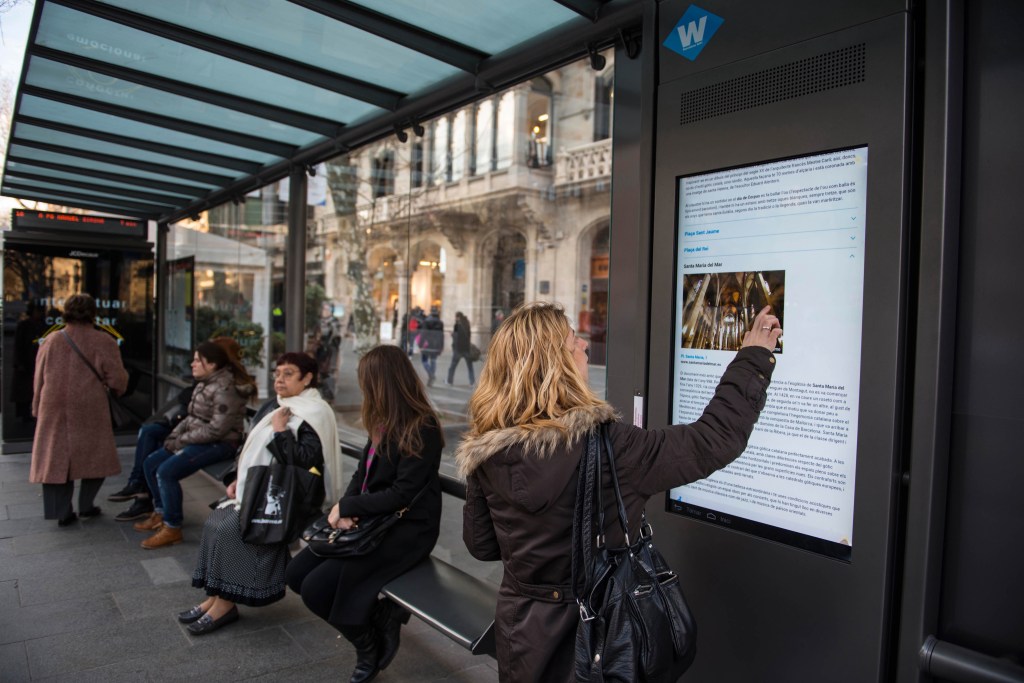
Over the past decade, Barcelona has redesigned its mobility network and infrastructure, creating an intelligent and user-friendly public transport system. The city has a new orthogonal bus network (horizontal, vertical and diagonal lines), making it faster, more frequent and easier to use, with hybrid buses that are one of the cleanest surface public transport fleets in Europe, and smart bus shelters that use solar powered screens to display arrival times. 

Smart bus shelters in Barcelona. Source: Medium

Traffic lights and queue detectors throughout the city feedback to a central system that adjusts the flow of traffic to avoid congestion and bottlenecks. Smart traffic lights also help emergency vehicles get to their destination by turning green as they approach.  

Smart technologies have also made private vehicle use more convenient, with sensors in street parking throughout Barcelona provide drivers with real-time parking availability through the ApparkB app. After just one year of operation, it had registered more than 4,000 parking permits per day. The data collected also provides the city with information on parking patterns to help improve urban mobility in the longer term.  

‘Smart’ environments 

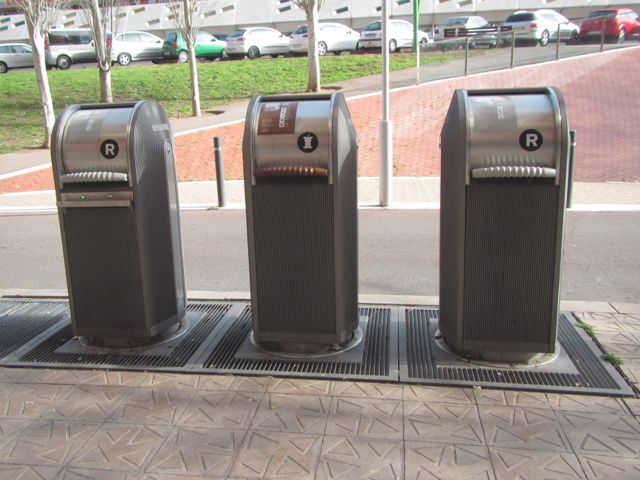
Barcelona’s new censored waste disposal system. Source: M2M Cafe

Barcelona has also incorporated smart technologies in its waste management system. An automated waste collection system made up of compact waste drop-off locations with sensors that notify collectors when full decreases noise pollution from pick-up trucks and keeps public space clear from overflowing bins. 

The city’s public space has also benefited from smart installations. More than 1,100 LED lampposts and smart lighting sensors across the city have reduced energy consumption by 30%, with streetlights running on timers with motion sensors. Similarly, irrigation of 68% of the city’s green spaces is remote controlled according to real-time data, reducing water consumption by 25% since 2014.  


Whilst Barcelona has clearly made impressive ‘smart’ improvements to many aspects of urban life, the concept of the smart city, and the mostly unseen influence of technology that it brings, has a significant potential to reshape urban environments and power relations.  

The systems of smart technologies and sensors that enable the city to self-regulate create new relationships with environmental flows such as energy and water. These systems also depoliticise urban planning and environmental management, and create a divide in who has power over urban life, with sensors and algorithms on one hand, and natural processes on the other.  The smart city concept has also been criticised for its potential impact on human-nature relationships, with some political ecologists theorising it may affect pro-environmental behaviours.

Whilst the smart city concept could potentially be a means of producing more sustainable, economically prosperous and inclusive cities, it may also be mobilised as a policy tool to reproduce existing socio-political relations, meaning we need to be wary of the driving factors behind the growing number of cities presenting themselves as ‘smart’.

HK: The Great Indoors

Broadening our view of the effects of air pollution within a growing field of Urban Political Ecology, we can consider how air quality physically shapes the built environment. With a knowledge of the microclimates which differentiate pollution levels around the city, we can even begin to see Hong Kong’s famous skyline as an indirect product of pollution, a manifestation of air’s role in ‘remaking urban environments’ (Véron, 2008, 2093).

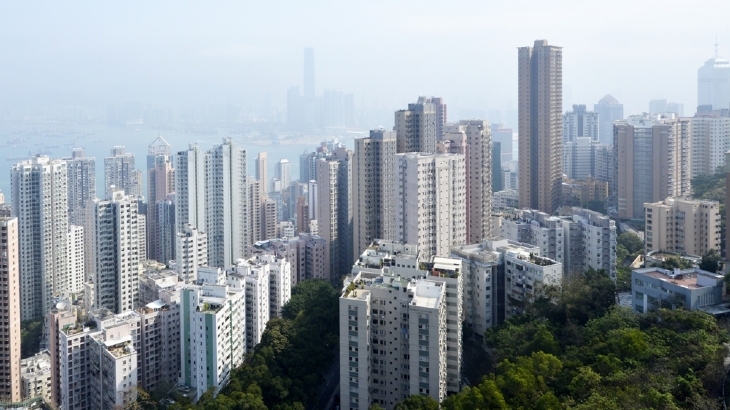
As we have explored, pollutants are often concentrated at street level, in what Wong, Ng and Yau have described as ‘street canyons’, which cause pollutants to be ‘trapped in the bottom 15m’ (2012: 14, in Graham, 2015: 204). An obvious response to this vertical stratification of pollutants is to build upwards. With 355 buildings more than 150m tall, Hong Kong is ranked as the world’s most high-rise city. Whilst vertical urbanism is certainly a product of high population density in the Special Administrative Region, the upward climb also represents an escape from the smog below, with the creation of ‘airy refuges’ (Graham, 2015: 202).

Looking down on the smog from the Mid-levels – Savills

As Tim Choy argues, the strategy is to build ‘into the air, and out of it’ (Graham, 2015, 203). But the option to live on higher floors comes at a premium, and in a city with the highest rental prices on earth, housing costs could even represent ‘indirect and partial commoditisation of air quality via property values’ (Vèron, 2005: 2096). This phenomenon is also tangible in the luxury properties lining the waterfront of Victoria Harbour, where wind helps disperse pollutants. Ascending up towards the Peak on Hong Kong Island, the Mid-levels is another popular refuge, explicitly recommended by the ‘Expat Essentials’ webpage for its ‘relatively unpolluted’ air. The ability of wealthier expatriates to escape pollution gives a new resonance to Graham’s terminology of a ‘colonisation… of vertical space’ (2015: 203). Thus, income inequality may be paired with privileges bestowed upon a residual post-1997 handover colonial class, in a striking manifestation of how ‘the impacts of toxic (air)’ are ‘distributed extremely unevenly and unjustly’ (Graham, 2015: 202).

AC Units – Cooling Post

The proliferation of air conditioning across the city is an extension of such dynamics. Apartments and offices are sealed off from the polluted outside air in perpetually-cooled isolated capsules in which ‘air is deliberately manufactured and conditioned’ (Graham, 2015: 205). Whilst walking around Kowloon on a visit several years ago, my friend guided our route to the waterfront to ensure we could walk through air-conditioned shopping malls most of the way. Malls an offices can be so cold that it is even advisable to bring an ‘indoor jacket’ to keep warm. Even in winter, the air-conditioners whir on, and during heatwaves AC units exacerbate temperatures, ‘dump(ing)’ heat ‘beyond the walls’ (2015: 205), creating a vicious cycle. Adding insult to injury, lowly pedestrians on the street often have to dodge the constant dripping of water from malfunctioning units above, which creates a micro-weather of patchy rain. Seeing it as her ‘civic duty’, resident expatriate Mary Mulvihill has campaigned for years to fix the problem, pestering local authorities but so far with limited success.   

An expat takes on the dripping – SCMP

Hong Kong’s air pollution is unevenly distributed on a variety of scales. The stratification of air quality mimics a social stratification, and in a city seen as a bastion of capitalism, the city manifests Véron’s description of ‘an indirect market for air quality’, as a supposedly ‘open-access’ resource becomes a commodity.

References:

Graham, S., 2015, ‘Life Support: The political ecology of urban air’, City, 19:2-3,192-215

Véron, R., 2006, ‘Remaking urban environments: the political ecology of air pollution in Delhi’, Environment and Planning A, vol. 38, 2093-2109

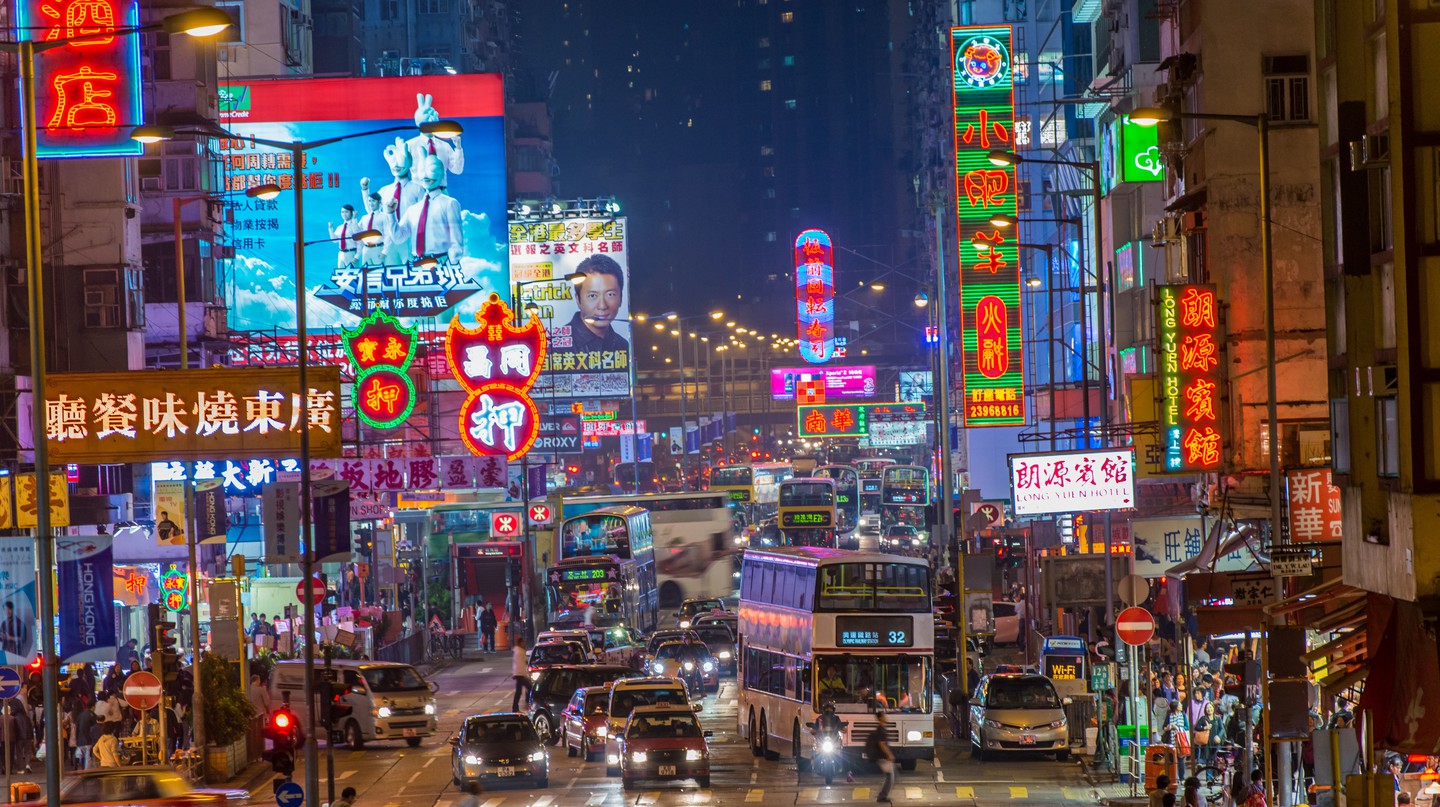
Feature Image: Lai Ching Yuen, Alami Stock Photo: https://theculturetrip.com/asia/china/hong-kong/articles/the-10-best-bars-in-mong-kok-hong-kong/

Looking down on the smog from the Mid-levels, Savills: https://www.savills.com.hk/resources-hub/district-guide/hong-kong-island/mid-levels-west.aspx

AC Units, Cooling Post: https://www.coolingpost.com/world-news/dripping-air-conditioners-a-problem-in-hk/

One City, Two Worlds: For whom is resilience designed ?

Last week, through the iconic Pasig River, we saw how nature can be seen as both “a wild thing” and “something dangerous to lose track of” (Price 2006). The (mis)management of the Pasig River is an insightful case to reflect on intersecting issues in the conceptualization and implementation of Manila’s resilience, as we will do in the two coming posts.

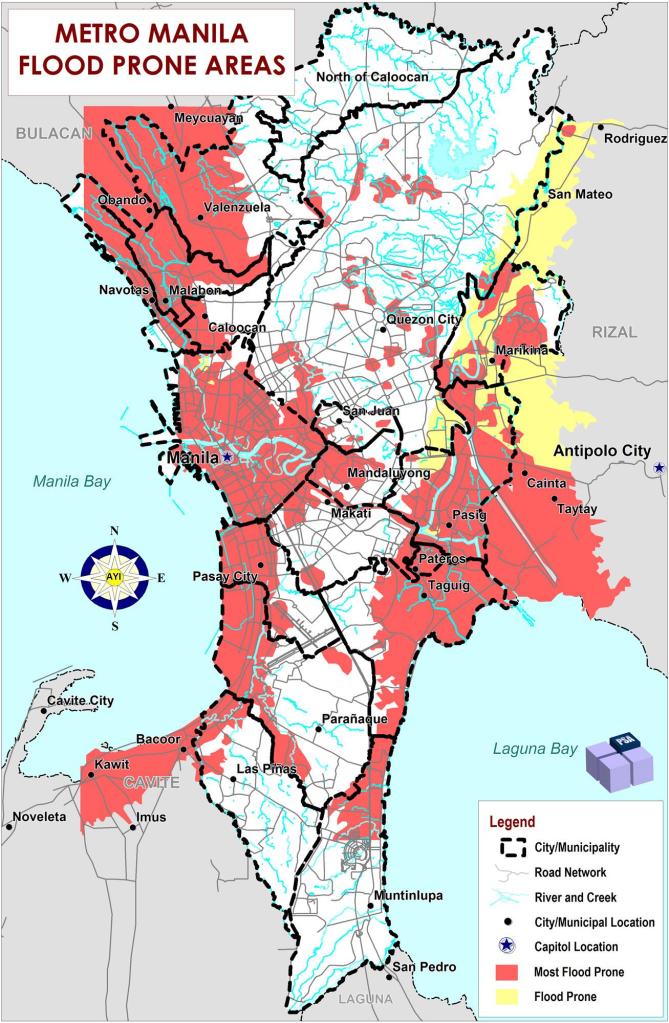
Manila is exposed to various risks: located in a semi-alluvial plain formed by the sediment flows from several river basins, it can be described as “a vast drainage basin” (Porio 2014). As the city realises that its nature is under threat, a constellation of initiatives and programs to improve resilience have emerged at different scales. The effects of globalisation intertwine with the city’s exposure to climate risks to produce structural inequality in both access to resources and vulnerability to hazards (Meerow 2017).

Metro Manila Flood Prone Areas represent the majority of the city’s space
Source: Twitter: Manuel L. Quezon III

Once City, Two Worlds

Two contrasting experiences of resilience emerge in Manila in the aftermath of recent disasters including the 2009 Ondoy floodings. Resilience policies are often aimed at the wealthy and disconnected from the realities of the most exposed populations.

During the “Manila 2019 to 2050” green building conference, the architects of Green Architecture Philippines, leaders in resilient urban development and design in Manila, took turns presenting innovative technologies that are totally inaccessible to the most exposed Manileños. For instance, famous “green architect” Luisa Daya-Garcia designs ecosufficient villas including luxury features like helicopter pads.

The Planning of Privatization

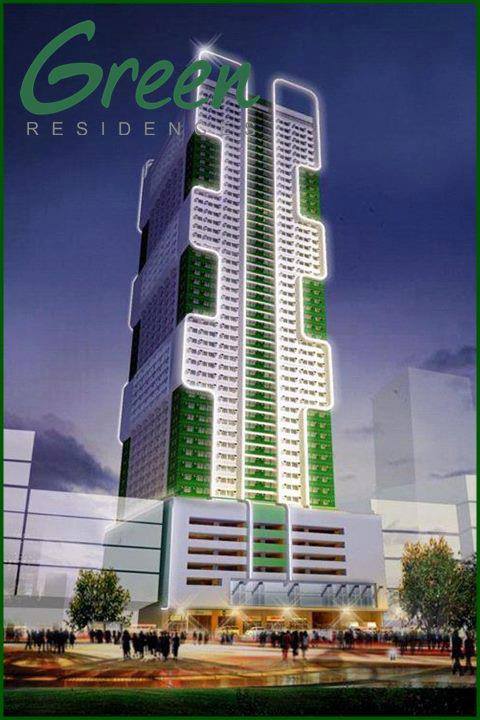
Established norms of zoning and construction (Magno-Ballesteros 2000) act as a reference for formal developments, especially large ones (Porio 2015). “Green-washing” is now a thing in Manila. Most projects are branded as “green” like the SMDC Green Residences, whose green lights illuminate the whole neighborhood at night. Despite what SM Development Corporation would have Manileños believe, this building is not recycling the waste of its 2000 residents. Commercial strategies of “green-branding” contribute to the growing prestige of such estates and further encourage the design of resilient buildings for the richest. In 2016, 37,000 state licenses were issued for high-income housing projects, against only 3,000 for low-income. As Goodfellow (2017) demonstrates, high-end building construction is seen as more likely to yield profits in the long run in fast-growing Southern metropolises. Resilience standards are thereby derived from their environmental purpose to promote a bubble-economy. This reflects what Shatkin and Mouton (2019) call the shift “from the privatization of planning to the planning of privatization”.

The 55-storey building is advertised throughout the city.
Source: Facebook: Green Residences

The destructive power of undifferentiated policy

Commercial developments can create human-produced risks by aggravating vulnerability to natural hazards of informal settlers. This is the case of SM Mall Aura Premier, one of the largest commercial spaces in the city, built in the middle of a floodable area next to Taguig River. Since the building and its foundations use non-absorbant materials, the surrounding informal communities face increased flood risks. Paradoxically, the Mall is often advertised as “green” and certified Gold under the LEED programme.

The very same rule is advocated in informal settlements, but it is deprived of any consideration for the settlers limited resources. In the reconstructions following the 2009 Ondoy floodings, however, only a third of the settlements met the city’s building code requirement of having two storeys, due to the lack of financial means (Porio 2014).

Wordcount: 551

Resources used:

Featured Image: AlJazeera. (June 29, 2016). Philippines: The inequalities awaiting Rodrigo Duterte. Retrieved from: https://www.aljazeera.com/indepth/inpictures/2016/06/philippines-inequalities-awaiting-rodrigo-duterte-160621114811426.html

Ballesteros, M. (2000). “Land Use Planning in Metro Manila and the Urban Fringe: Implications on the Land and Real Estate Market”. Discussion paper series 2000(20), PIDS.

Goering, L., (2016). Manila most exposed city to natural disasters: global assessment. Thomson Reuters Foundation. Retrieved from https://news.abs-cbn.com/focus/03/23/16/manila-most-exposed-city-to-natural-disasters-global-assessment

Goodfellow, T. (2017). Urban fortunes and skeleton cityscapes: real estate and late urbanization in Kigali and Addis Ababa. International Journal of Urban and Regional Research, 41(5), 786-803.

JICA (Japan International Cooperation Agency). (2014). Roadmap for transport infrastructure development for metro Manila and its surrounding areas (region III & region IV-A) in the Republic of the Philippines. Japan International Cooperation Agency: ALMEC Corporation.

Meerow, S. (2017) Double exposure, infrastructure planning, and urban climate resilience in coastal megacities: A case study of Manila. Environment and Planning A 2017, Vol. 49(11) 2649–2672.

Mouton, M., & Shatkin, G. (2019). Strategizing the for-profit city: The state, developers, and urban production in Mega Manila. Environment and Planning A: Economy and Space52(2), 403–422.

Porio, E. (2014). Climate Change Vulnerability and Adaptation in Metro Manila. Asian
Journal of Social Science 42(2), 75–102.

Porio, E. (2015) Sustainable development goals and quality of life targets: Insights from Metro Manila. Current Sociology Monograph 2015, Vol. 63(2) 244–260.

You spin me right round: circular economy in Nairobi’s informal settlements

Welcome back! Today’s topic is one of Nairobi’s circular economy. The circular economy is a model of production and consumption in which existing materials are shared, reused, leased, repaired, reconditioned and recycled. In this way, the life cycle of the products is extended. In practice, this means that waste is reduced to a minimum. Materials can be used productively, again and again, to continue generating added value (Myers, 2005; Stahel, 2016).

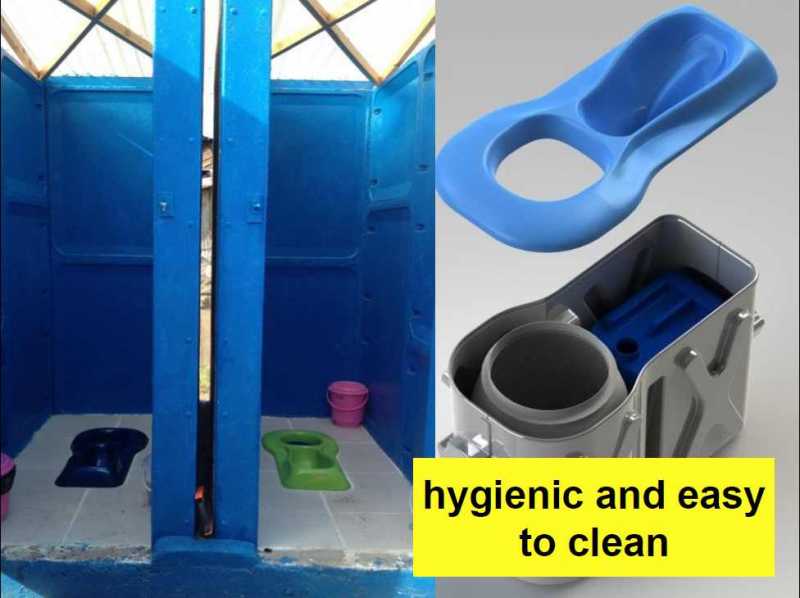
One example of circular economy in Nairobi’s informal settlements is the reuse of human excrements. Sanergy is a social profit providing so-called “Fresh Life” centres that constitute toilets, freshwater and showers, as illustrated by the image below. The centres, made of prefabricated and easy-to-clean building elements, are rented out for the equivalent of 450 euros a year to young entrepreneurs. They collect their costs through entrance fees for the centres – around 5 cents per visit to the toilets.

Fresh Life Toilet. Source: Sanergy, 2017

Human excrements are collected hygienically in safe containers and then transported for treatment and recycling. Since 2010, this container-based solution (CBS) has been emerging as a viable low-cost option for sanitation service delivery, particularly in low-income urban settlements where the need for sanitation services is high and infrastructure would be costly to install. The portable nature of CBS makes it appealing in low-income urban contexts as it requires little space and limited to no in-house construction.

Sanergy also offers an end-to-end service which entails the safe removal and transportation of all waste generated by the residents to a central processing plant, where it is treated and converted into agricultural inputs – organic fertiliser and insect-based animal feed. This closed-loop solution leaves zero waste behind, thus contributing to the emerging circular sanitation economy.

Circular Economy principles are increasingly becoming a business imperative, as circular business models allow companies to reduce costs and generate new revenue streams. Following this principle, Sanergy is formed of two independent entities, profit and non-profit. Sanergy’s profit arm collects waste and processes it into fertiliser and insect-based animal feed which is then sold to farmers. The non-profit arm has built the sanitation network by unlocking digital solutions.

Have a look at the video below, illustrating the different venue streams of the reuse of human excrements!

https://www.youtube.com/watch?v=Q_xFEVmXWjE&t=17s

Sanergy has now leased more than 250 such centres and sells 25 tonnes of excrement a month – mainly to flower farmers who plant roses, tulips and orchids for European buyers. In this way, shit doesn’t necessarily turn into gold – but at least it turns into fragrant birthday presents.

425 words

VISUAL REFERENCES

Featured image: Banks, M. (2019). Circular Economy. Retrieved from https://www.eupoliticalreport.eu/tag/circular-economy/

Sanergy (2017). Fresh Life Toilets. Retrieved from https://na.eventscloud.com/file_uploads/6470738ab794490f6ad51dab7717c31c_Sanergy-TJ.pdf

From Dream to Nightmare: Human Security and the Mismanagement of the Pasig River

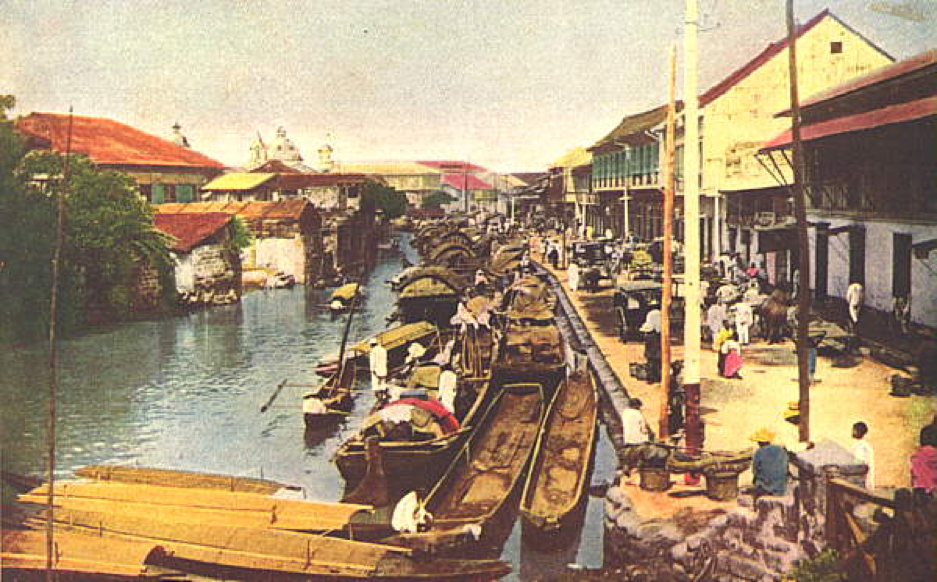
The Pasig River plays a vital ecological role for the city of Manila, connecting the two bays that open the city respectively to Asia and the Pacific. Manila was founded by the Spanish settlers as a strategic trading point. The Pasig River allowed goods from all over the Spanish Empire to be transported through the city. The river’s tributary system structured the life of the city and its inhabitants (Macas 2014).

Unfortunately, the river has largely been the victim of the city’s great demographic boom. Far from the bucolic waterway that once made up its charm, the river has become a symbol of the mismanagement of natural resources in Greater Manila.

Merchandise from the Americas was historically traded on the Pasig River banks.
Source: Picturesque Old Philippines

The river is now infested with chemicals, covered with floating plastic waste and hyacinth, making maritime transport difficult. The Pasig River was declared ecologically dead in the 1990s (Gorme et al., 2010).

The dramatic consequences of pollution in the Pasig River are felt in the city in many ways. Water quality in Manila is not simply an environmental issue: it is an issue of public health and quality of life for the most vulnerable inhabitants.

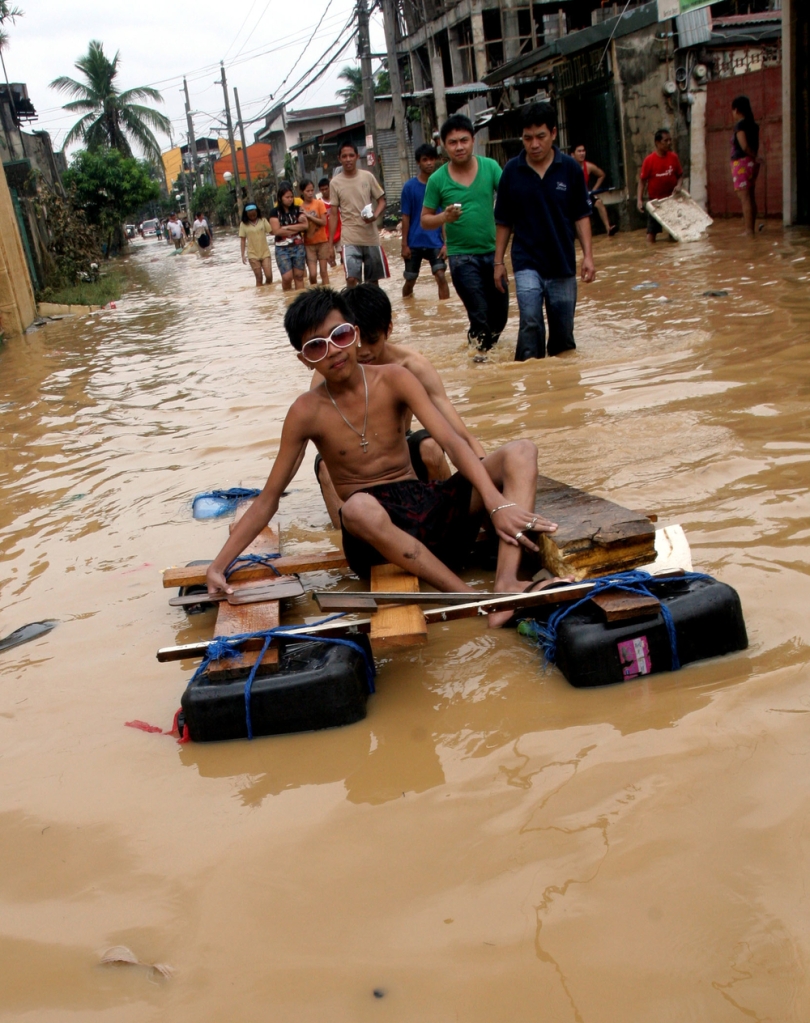
Manila is hit by more than 10 typhoons per year on average (World Bank 2009). When water flows in the city, pollution causes sewers to become clogged and prevents the efficient flow of excess water. Tributaries filled with organic matter overflow and flood the precarious dwellings of communities illegally settled on the banks. Following Typhoon Ketsana in 2009, an outbreak of leptospirosis affected large sections of the population forced to wade through contaminated water (IRIN 2009).

Filipino youth play on stagnant flood waters
Source: IRIN News

This phenomenon is largely catalyzed by land scarcity: the Pasig River flows through poor and dense cities, including the old city of Manila, known to be the most densely populated in the world. Land prices rose exponentially in the 1990s, and newly built private mixed-use developments have pushed away the most vulnerable to settle on hazardous land, in low-lying areas (Shatkin 2004). On coastal and river lines, informal settlements without permits have been expanding dramatically (Porio 2011). Meanwhile, residential and commercial developments have increased flood risks due to the disappearance of traditional waterways (Porio 2014).

Sewage systems are especially difficult to establish in hardly accessible riverlines, so that informal settlers resort to private septic tanks, whose structure and maintenance is often substandard. Many of them are made of plastic – not cement – and thus constitute a threat for public health and the urban environment. According to Porio (2014), the inhabitants lack the means to rebuild more resilient housing. As much as 83% of the victims of floods following typhoon Ketsana had no social security coverage (World Bank 2009), notably because 40% of Manila’s population is employed in the informal sector of the economy (Shatkin 2004).

The mismanagement of the Pasig River is closely linked to Manila’s political choices. Indeed, the privatization of water networks has prevented the creation of an efficient sewerage system in these areas. In 1997, when Manila Waterworks and Sewerage Systems (MWSS) was privatized, the companies promised to achieve 67% sewer connection coverage by 2021. By 2017, the proportion of household wastewater undergoing treatment was only 12% (Palanca-Tan, 2017) because there is no strong economic incentive for companies to provide universal coverage. The poorest families are tempted to dispose of their wastewater in the river because they can’t afford to pay their connection to the sewer system, set to 100 pesos per month (2USD). Most importantly, “pirate networks” – illegal connections to the water and sanitation system (Sundaram, 2010), multiply as a consequence of the high price of drinking water. These autonomous coping methods generate water leaks and increase the risk of flooding. Besides, Local Government Units (LGUs) are competing to attract private investment in Manila’s decentralized framework (Porio 2012). Consequently, they often relax compliance standards. Weak enforcement against industrial dumping is responsible for much of the river pollution.

Climate change mitigation and adaptation, waste management and rehabilitation of the river tributaries are mostly lead by international agencies like the World Bank and the Asian Development Bank (WEPA 2018) because they have sufficient financial and technical means to implement their solutions in local communities and make use of public-private partnerships. With the help of INCLAM, a water engineering firm based in Spain, the Asian Development Bank has developed innovative “condominial sewage systems” – large-capacity underground septic tanks – where wastewater is treated. Its organic substance serves as nutrients for the surrounding vegetation (Valermo 2016).

Within Public-Private Partnerships, international organizations also use rooted community-based organizations (CBOs) as intermediaries with the population to limit financial risk. CBOs are responsible for the local logistics around the condominial sewage systems, but also for the regular cleaning of the waterways by teams of “River Warriors” – Residents trained and paid to make the river trash-free. River Warriors managed to make the area a flood-free environment and public health has improved significantly in recent years (ADB 2010).

The ADB is leading numerous local sustainable development initiatives in Manila
Source: Asian Development Bank: The Pasig River: Reviving a Dead Water in the Philippines

The main dimensions of sustainable development, namely economic development, environmental protection and social inequalities, are revealed through challenges and initiatives in place around the Pasig River’s ecology and human security. Public policies must grasp Manila’s pre-existing vulnerabilities to achieve efficient and fair resilience.

Wordcount: 859

Resources used:

Featured Image: pasig River Watch (March 10, 2011). Pasig River: Before and After. Retrieved from: https://pasigriverwatch.wordpress.com/2011/03/10/updates-on-pasig-river/

Asian Development Bank (2010). Philippines: Pasig River Environmental Management and Rehabilitation Sector Development Program. Completion Report. Retrieved from: https://www.adb.org/sites/default/files/project-document/62108/30308-02-phi-pcr.pdf

Disasters: Deconstructed Podcast Season 1, Episodes 10 & 11.  Retrieved from: https://disastersdecon.podbean.com/.

Gorme, J., Maniquiz, M., Song, P. and Kim, L. (2010). The Water Quality of the Pasig River in the City of Manila, Philippines: Current Status, Management and Future Recovery. Environmental Engineering Research, 15(3), 173-179. 

IRIN News (2009). Flood victims grapple with Leptospirosis. Retrieved from: http://www.thenewhumanitarian.org/news/2009/10/28

Macas, T. (2014). Burnham’s century-old ideas can still be used to improve Manila. GMA News Online. Retrieved from: https://www.gmanetwork.com/news/lifestyle/content/383820/burnham-s-century-old-ideas-can-still-be-used-to-improve-manila-architect/story/

Porio, E. (2011). Vulnerability, Adaptation, and Resilience to Floods and Climate Change-Related Risks among Marginal, Riverine Communities in Metro Manila. Asian Journal of Social Science, 39, 425-445.

Palanca-Tan, R. (2017). Health and water quality benefits of alternative sewerage systems in Metro Manila, Philippines. Environment & Urbanization, 567-580. 

Porio, E. (2012). Decentralisation, Power and Networked Governance Practices in Metro Manila. Space and Polity, 16(1), 7–27.

Porio, E. (2014). Climate Change Vulnerability and Adaptation in Metro Manila: Challenging Governance and Human Security Needs of Urban Poor Communities. Asian Journal of Social Science, 42(1), 75-102.

Redclift, Michael (2000) “Addressing the Causes of Conflict: Human Security and Environmental Responsibilities”. Review of European Community and International Environmental Law 9(1), 44-51.

Shatkin, G. (2004). Planning to Forget: Informal Settlements as “Forgotten Places”. In Globalising Metro Manila. Urban Studies, 41(12), 2469–2484.

Valermo, A. (2016). Cleaning Up Manila’s Pasig River, One Tributary at a Time. CityLab. Retrived from: https://www.citylab.com/environment/2016/06/cleaning-up-manilas-pasig-river-one-tributary-at-a-time/488885/

Water Environment Partnership in Asia (2018). Pasig River. Policies. Retrived from: http://www.wepa-db.net/policies/measures/background/philippines/pasigriver.htm

World Bank (2009). “Philippine Typhoons Ondoy and Pepeng: A Joint Assessment”. Sector Reports. Typescript.

World Health Organisation (1997). Water Pollution Control – A Guide to the Use of Water Quality Management Principles. Case Study III – The Pasig River, Philippines.

Barcelona’s tourism: A threat to the city’s population, environment and culture

The urban regeneration programme that came with the 1992 Olympic Games transformed Barcelona from a tired industrial port city to a cosmopolitan tourist destination, offering culture, architecture and beaches. Since 1990, tourism numbers in the city have increased from 2 million to over 30 million in 2017, making it the fourth most-visited European city. Some of the tourist appeal is inherent, given the city’s location, climate, food and relaxed atmosphere, but other aspects have been engineered by local government and the tourism board, constantly trying to attract more tourists despite the city’s increasing lack of capacity. The city’s success as a cultural tourist destination is becoming paradoxical; with it now so overrun with tourists it is at risk of losing the character that made it so popular in the first place.  

Several factors have contributed to the incredible increase in tourism that has occurred in Barcelona since the 1990s. Following the 2008 crisis, the city government promoted Barcelona to international markets as a holiday destination, encouraging the influx of tourists as an economic-survival strategy for the city. More recently, external forces such as the growth of Airbnb and the rise in budget air lines and cheap travel have also contributed to Barcelona’s tourism boom.  


In barrios worst affected by tourism, increasing rent prices, the conversion of long-term rental properties to Airbnbs, and the constant disruption brought by masses of tourists has led to locals fleeing: between 2006 and 2013, 12.3% of the local population left the Ciutat Vella. The Raval district has also been particularly affected by the rise in Airbnb properties. A historically poor and densely populated area; known by the end of the 20th century for its drugs, crime and prostitution. In the 1990s, city policy revived the Raval district, transforming it into a cultural zone with museums and academic institutions and attracted new residents and visitors. However, this regeneration rapidly gentrified the neighbourhood, leading to an increase in tourists and rental properties, and increasing the cost of living. Rental property in the Raval district has become one of the most expensive per square meter, despite average incomes in the area being below the city average.  

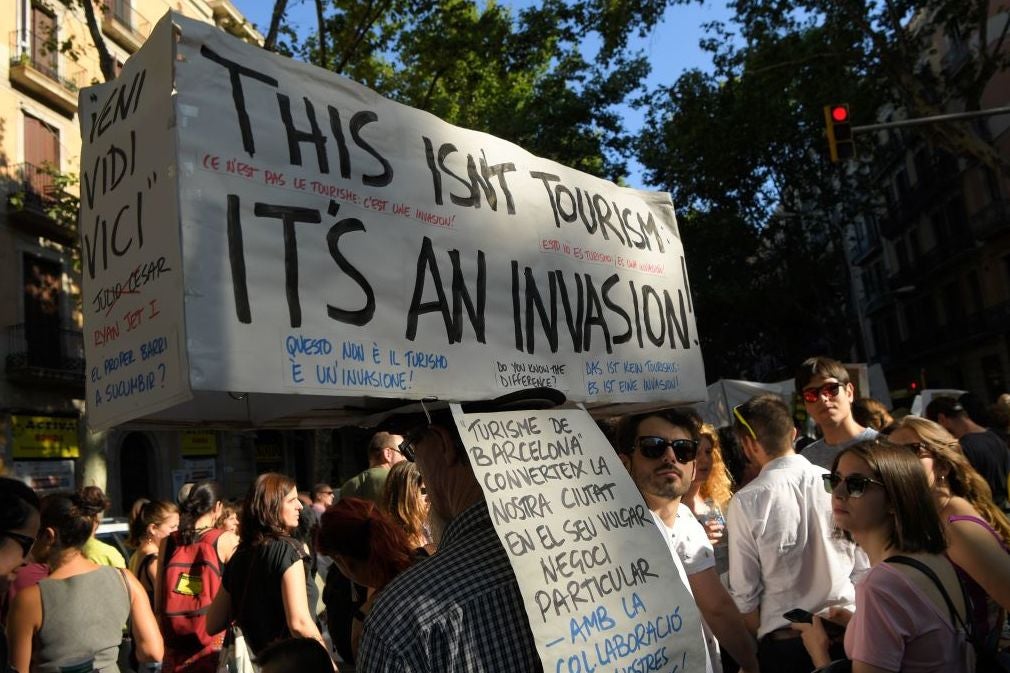
barcelona-protest.jpg
Tourism protests in Barcelona, August 2017. Source: Independent

Barcelona’s Gothic Quarter has the highest concentration of Airbnb rentals in the city, with one tourist apartment for every 9.2 homes, and has lost 18% of local residents in recent years due to the influx of tourists and increased rents. The increase in tourist numbers has also shaped the amenities in the city, with daily commerce substituted for shops and services aimed at tourists, that are generally inaccessible or useless for locals. This homogenisation of areas of the city to tourist ghettos threatens the guiding principles of the Cerda’s plan for the city: diversity and social cohesion. It has also resulted in both peaceful and violent protests from Barcelona locals, trying to regain their city from being entirely overrun by tourists.  


As well as impacting the residential structures of the city, Barcelona’s tourism has direct impacts on the city’s natural environment. As discussed in a previous post, Barcelona suffers from problems of air pollution. In 2019, Barcelona was found to be one of the most polluted ports in Europe. The tourism industry is responsible for much of this pollution, emitting the highest amounts of sulphur dioxide and carcinogenic nitrogen oxide from cruise ships visiting the port; with cruise ships in 2017 emitting nearly five times as much sulphur dioxide as the city’s cars. Although Barcelona’s ports contribute significantly to the city’s tourist numbers and emissions, 82% of tourists arrive in Barcelona by plane, with air travel responsible for 75% of carbon emission in the tourism sector.  


Barcelona’s tourism has also led to the commodification of city’s natural areas. The city’s famous Park Güell has stopped being used as a traditional park and is almost entirely used as a tourist destination. In 2013, more than 9 million people visited the park, only 2.4% of which were Barcelona citizens. In October 2013, to try and manage the overcrowding of the park and attempt to return it to the locals, the city introduced an entry fee only for tourist and limited the number of visitors to 800 per hour. Whilst from a classical liberal position these measures were an attempt to preserve the history of the site, the privatisation and regulation of the park was met with criticism along the lines of Lefebvre’s right to the city with the ‘Right to Gaudi’ – arguing against urban strategies confining and privatising public realm due to excessive tourist numbers.  

Overcrowding at Park Güell, August 2013. Source: Khare

Over the past thirty years Barcelona has branded itself as a tourist destination, offering sun, sea and culture. However, it is unsurprising that the city and its residents are reaching their tourism limits due to the phenomenal speed at which Barcelona’s tourism sector has grown. It will be interesting to see whether the public outcry for reduced numbers of visitors will materialise in a reduction in tourist numbers, or alternatively, how the city will cope if tourism numbers continue to rise at even a fraction of the rate they have done.  

Water as a Threat: Dakar’s Vulnerability to Flooding

Floods affect “900,000 people affected in West Africa every year and more than 2 million in the whole continent” (Bottazzi et al., 2018). Like many African countries, Senegal has experienced more episodes of flooding in the last decades, while their severity and recurrence particularly rose since 2005. In 2008, floods afflicted 264,000 Senegalese families and damaged many infrastructures.
Since the concentration of population and infrastructure implies higher flood exposure, flood management is a key challenges in urban areas. Located on the Cap-Vert peninsula on the Atlantic coast, Dakar is particularly vulnerable. In 2009, floods affected one third of the population in Pikine, the most populous municipality of the metropolitan region of Dakar.

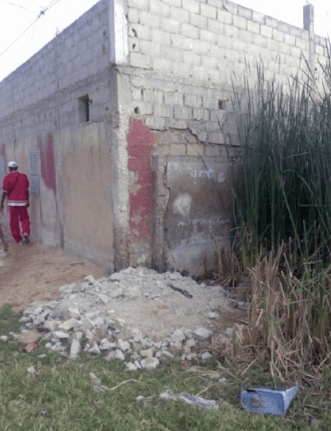
Although climate change and precipitations are obviously not helping, floods are mainly due to the inadequacy of Dakar’s urban planning. As a result of ” rapid urbanisation, urban sprawl beyond the authorities control and the lack of affordable land” (Cissé & Sèye, 2015), low-income people are forced to settle in marginal and vulnerable areas. In fact, flooding is not always an obstacle to households occupying high-risk neighbourhoods and occupation in Dakar’s cheap flood-prone lands has even gone up in last years.

The Senegalese government mobilized major investment for large-scale drainage infrastructure and resettlement sites for affected households. But if these measures are important, they remain insufficient.
Indeed, these initiatives adopt a top-down approach and are often not adapted to local contexts, as they ” fail to consider the everyday adaptation strategies of local stakeholders” (Bottazzi et al., 2019). Furthermore, people with low and irregular income are usually reluctant to move to the resettlement areas where they will likely have less space in their house, will not be able to access bank loans to build additional rooms nor pay the cost of being rehoused.

Floods are a major cause of material destruction, but they also affect economic activities thus increasing economic vulnerability. Moreover, dealing with flooding means less time for income-generating activities. Of course, houses are the most affected by flooding, while they also greatly suffer from the rain.


According to the 2012 report of the Intergovernmental Panel on Climate Change, vulnerability refers to “the propensity or predisposition to be adversely affected”. More precisely, it is comprised by exposure to hazard and the inability to cope with any damage caused by those hazards. The residents of low-income neighbourhoods are therefore disproportionately exposed due to inherent vulnerability in under-serviced urban areas.

In the absence or inefficiency of basic protective infrastructure and support from the state, the urban poor rely on informal and community-based arrangements for risk reduction. According to Abdou Salam Fall, the poor are “resourceful people always in the process of tinkering away to survive” (Cissé & Sèye, 2015). Indeed, local residents of the Yembeul Nord municipality of Pikine, one of Dakar’s low-income suburbs, developed strategies in response to floods and their impacts (sandbags or rubble to absorb stagnant water or raise houses, manually remove water, pump, drain, repair or improve buildings).


Launched in 2013, the “Live with Water” project aims to improved the flood resilience of vulnerable populations in Dakar suburbs. Although some impacts could be rapidly observed by physically protecting households from water with drainage infrastructure, “most people did not feel that they were able to anticipate flood risk” adequately (Bottazzi et al., 2018). As a matter of fact, projects like the LWW program tend to focus on short-term impacts through increased absorptive capacity, while adaptive and anticipatory abilities are not addressed.

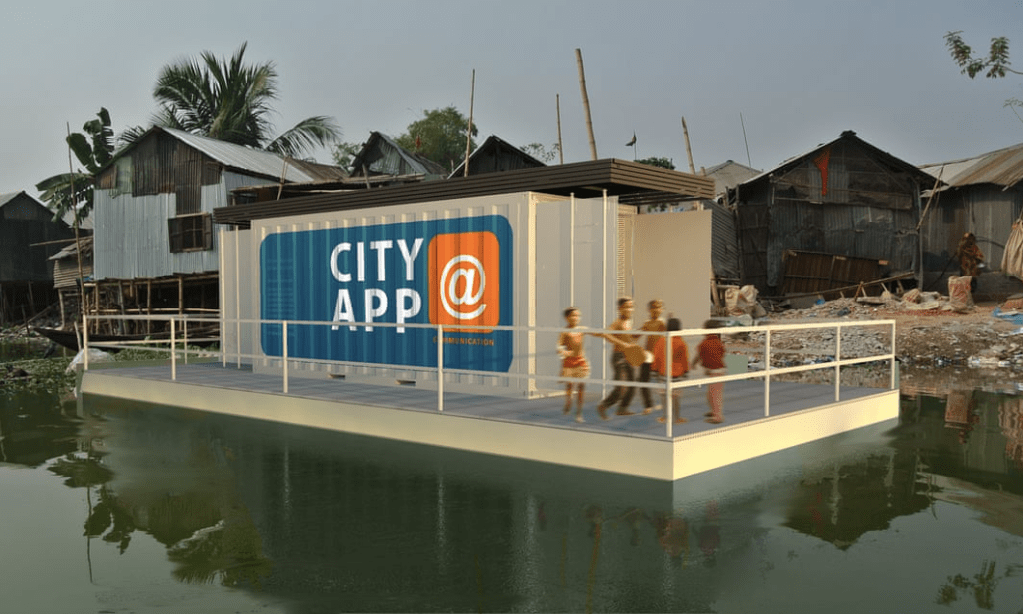
Instead of treating water as a threat, maybe we should work with it in order to effectively adapt and anticipate. This is at least what Koen Olthuis thinks. The founder of Waterstudio is trying to improve living standards in waterside slums by providing fundamental services (education, sanitation, power) in shipping containers made of waste plastic bottles. These “city apps” float and are easy to install and launch. They are therefore a good investment for governments as well as for private investors who are ordinarily reluctant to invest in flood plains.


Nonetheless, the “crisis in solid waste management” (Šoltésová, 2017) I talked about in my previous post must be addressed as a priority, especially regarding flooding. “Nature and society are in this way combined to form an urban political ecology, a hybrid, an urban cyborg that combines the powers of nature” and the social fabric (Swyngedouw, 2006). Indeed, the poor waste management in Dakar results in large amounts of trash in the streets and nature that, with flooding, inevitably pollute water and produce environmental degradation.

No shit! Human excrements in Nairobi’s informal settlements

Today’s topic might feel uncomfortable reading about! Still, it is an issue that urgently needs to be addressed given the side effects it entails for the population of Nairobi’s informal settlements: human excrements!

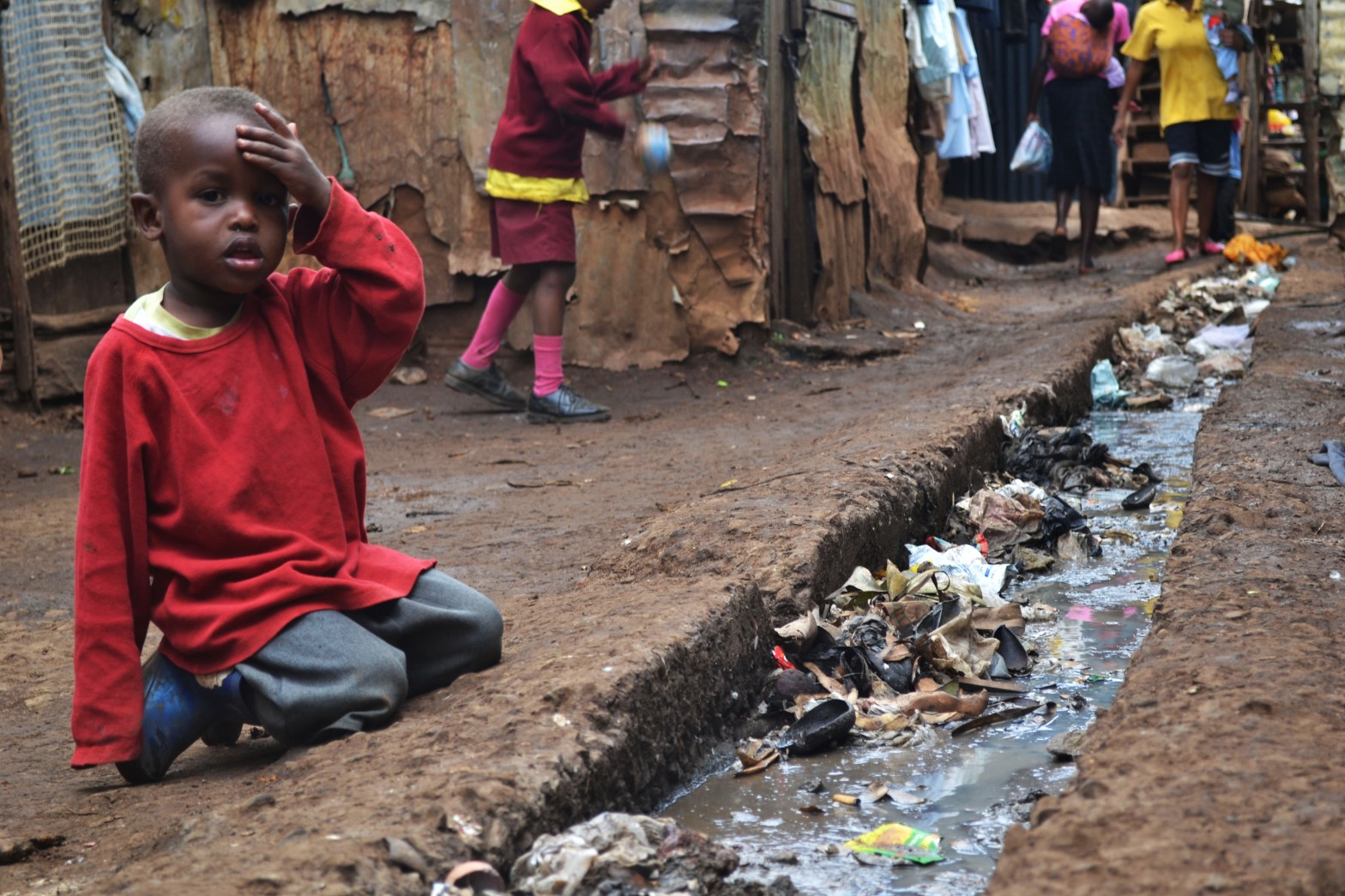
As indicated in the blog on water pollution, human excrements are one reason for the persistence of particular diseases and infections in Nairobi’s informal settlements. Not imaginable for us, inhabitants of Nairobi’s informal settlements cannot afford to go to the toilet, do not have access to a toilet, or are afraid of safety issues when going to the toilet. The result of that: ‘flying toilets’, also called ‘scud missiles’. Flying toilets, a term that I have often heard in my research. People use plastic bags as a toilet which they dispose of anywhere, mostly by throwing them onto the street, the railway, or into the river. Amongst women, this way of doing their business is particularly popular as it prevents them from going to the toilet at night.

Although flying toilets play an important public health role, the ones that burst open again and again cause cholera and other diarrhoea, especially among children playing in the street dirt: Even the rainwater collected from the roofs of the huts is often contaminated by the bursting manure bombs. In informal settlements, dozens of people fall victim to infectious diseases every year. The government therefore regularly calls for so-called ODF actions: The informal settlements are to be made “Open Defecation Free”.

The video below illustrates ‘flying toilets’ in Kibera.

https://www.youtube.com/watch?v=FKwZBL2WEfA

Lamba (1993) refutes the widespread belief that the urban poor cause their own environmental damage and argues that it is “not that slum residents are irresponsible, but that the City is irresponsible in not providing proper sanitation services” (p. 35). In this sense, although Nairobi City Council is obliged to provide solid waste management services to everyone, it focuses on residential areas. This exclusionary provision of services exacerbates the already deplorable environmental conditions of Nairobi’s urban poor (Njeru, 2006). The inhabitants of Nairobi’s informal settlements are therefore exposed to environmental pollution of immeasurable proportions. This constitutes an environmental severe injustice.

The following blog post will focus on how human excrements are becoming part of Nairobi’s circular economy. You can look forward to reading about some solutions you have probably not heard of before. Until then, stay well!

394 words

LITERAL REFERENCES

Lamba, D., 1993. Environment: the prevailing situation. In: Karuga, G.J. (Ed.), Actions towards a Better Nairobi: Report and Recommenda- tions of the Nairobi City Convention: ‘The Nairobi We Want.’ City Hall, July 27-9. Nairobi City Council, Nairobi, pp. 33–41.

Njeru, J. (2006). The urban political ecology of plastic bag waste problem in Nairobi, Kenya. Geoforum37(6), 1046-1058.

VISUAL REFERENCES

Featured image: Trocaire (2012). A young boy sits over an open sewer in Kibera. Retrieved from https://commons.wikimedia.org/wiki/File:A_young_boy_sits_over_an_open_sewer_in_the_Kibera_slum,_Nairobi.jpg

Design a site like this with WordPress.com
Get started