The repurposing of Barcelona’s vacant lots as urban gardens

Urban gardening was an important aspect of life in Barcelona until the late 20th century. Infrastructural developments and the urban renewal that spread across the city around the 1992 Olympic Games removed almost all its urban gardens – between 1993 and 2000 almost 8,000ha of agricultural land in the Barcelona Metropolitan Region was lost to make way for new transport links and urban developments. As a result, the urban gardens of Barcelona today have mostly emerged since the early 2000s.  

The urban gardens that have emerged in Barcelona since the turn of the century have often been the result of protest, occupying the empty spaces the city’s urban expansion left behind. One of largest community gardens in Barcelona is Can Masdeu; situated on the site of a former leper colony on the outskirts of the city, it was occupied in 2001 to raise awareness of climate change, and has since been associated with social and ecological protest movements. The city’s urban gardens, and the protests that led to them, also exist at much smaller scales. L’Hortet del Forat in the El Borne neighbourhood began in 2004 following local struggles over how space created by the demolition of a building in the Ribera district should be used. The open space, that used to be known as the “hole of shame”, is now a thriving self-managed community garden, with allotments, a football pitch and children’s playground.  

L’hortet del forat. Source: The Urban Activist

Whilst many of the urban gardens are the result of protest and occupation, there have also been initiatives led by the city council, promoting urban gardening to increase the amount of green space in the city. The Network of Urban Gardens is a participatory programme established in 1997, encouraging citizens over 65 to develop urban gardens on public land; providing social and environmental values to both the people involved and their local communities.  


Following the economic crisis of 2008, there was a proliferation of urban gardening initiatives across Barcelona, with bottom-up movements occupying vacant spots to grow food, foster community cohesion and improve public space. In 2013, the city council launched Pla Buits (meaning ‘empty plan’), a co-management initiative that aims to involve civil society in the design, implementation and management of unused spaces across the city.  

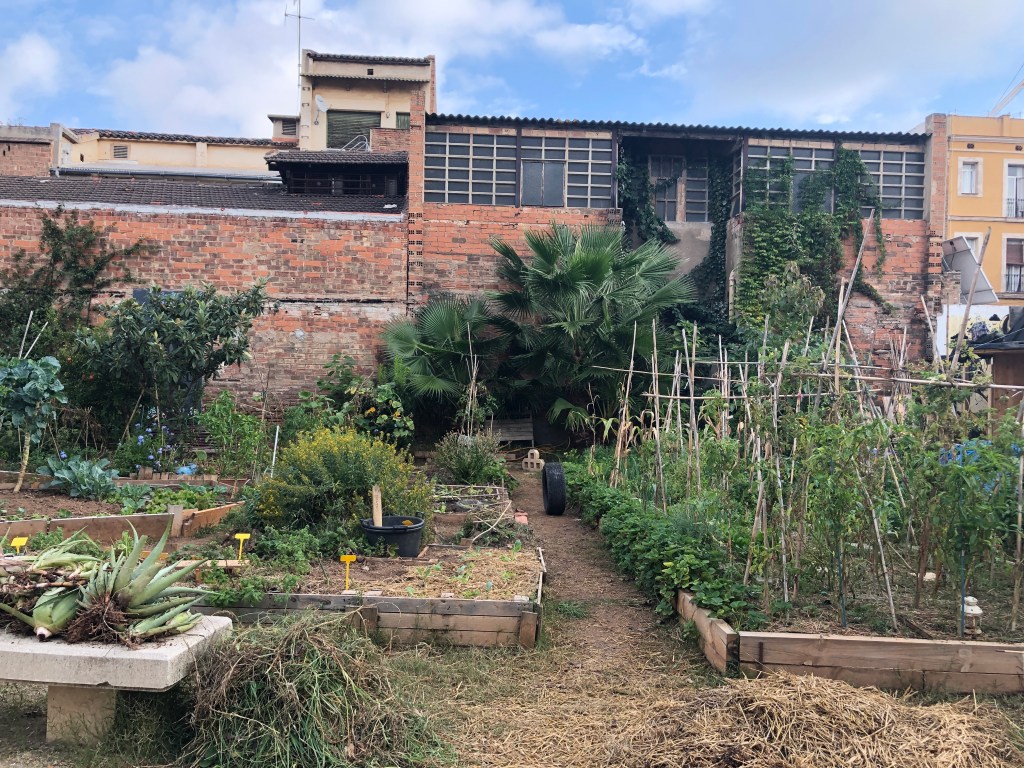
On a trip to Barcelona in October 2019, I came cross one of the community gardens that emerged as a result of the Pla Buits. The ConnectHORT garden in the Poblenou neighbourhood was created in 2016 as a space for education, agriculture and community engagement. The garden occupies the empty space of a walled-off derelict plot, hardly noticeable from the street. However, within the walls, the garden was thriving a space, growing food and encouraging the community to come together, offering a range of classes from agriculture to woodwork.  

The benefits of the community gardens that have emerged throughout Barcelona are not just social. Research by URBES found that the gardens of Barcelona provide 20 key ecosystem services to the city’s residents, including the supply of high-quality food, pollination and stress reduction.  


Barcelona’s high density means that public space, and how it is used, can be a controversial and highly politicised issue. Urban gardens in Barcelona are under increasing pressure due to the city’s rapid sprawl. These gardens also highlight the contradictions of public policy in managing urban development – on the one hand, community-run gardens support the sustainability goals and “greening” initiatives that city’s such as Barcelona are pursuing; however, on the other hand, the same gardens may pose obstacles to the advancement of urbanisation, with mainstream urban policy supporting their removal in favour of more economically valuable development.  

The repurposing of empty spaces within the city, and the neighbourhood groups that develop and manage these plots, demonstrate the impact that community initiatives have had on the evolution of Barcelona’s urban fabric. Whilst the commitment shown by community gardeners to cultivate land and spread environmentalist messages throughout the city is becoming increasingly recognised by the formalisation of gardens, they are still at risk of removal due to mainstream urban policy’s pursuit of growth. The importance of the recognition of urban gardens, in Barcelona and other cities around the world, for their social, economic and environmental potentials is increasingly important, especially in the face of climate change and an uncertain urban future that may require a move away from conventional food production.
In deep water: Lacking clean water resources in Nairobi’s informal settlements

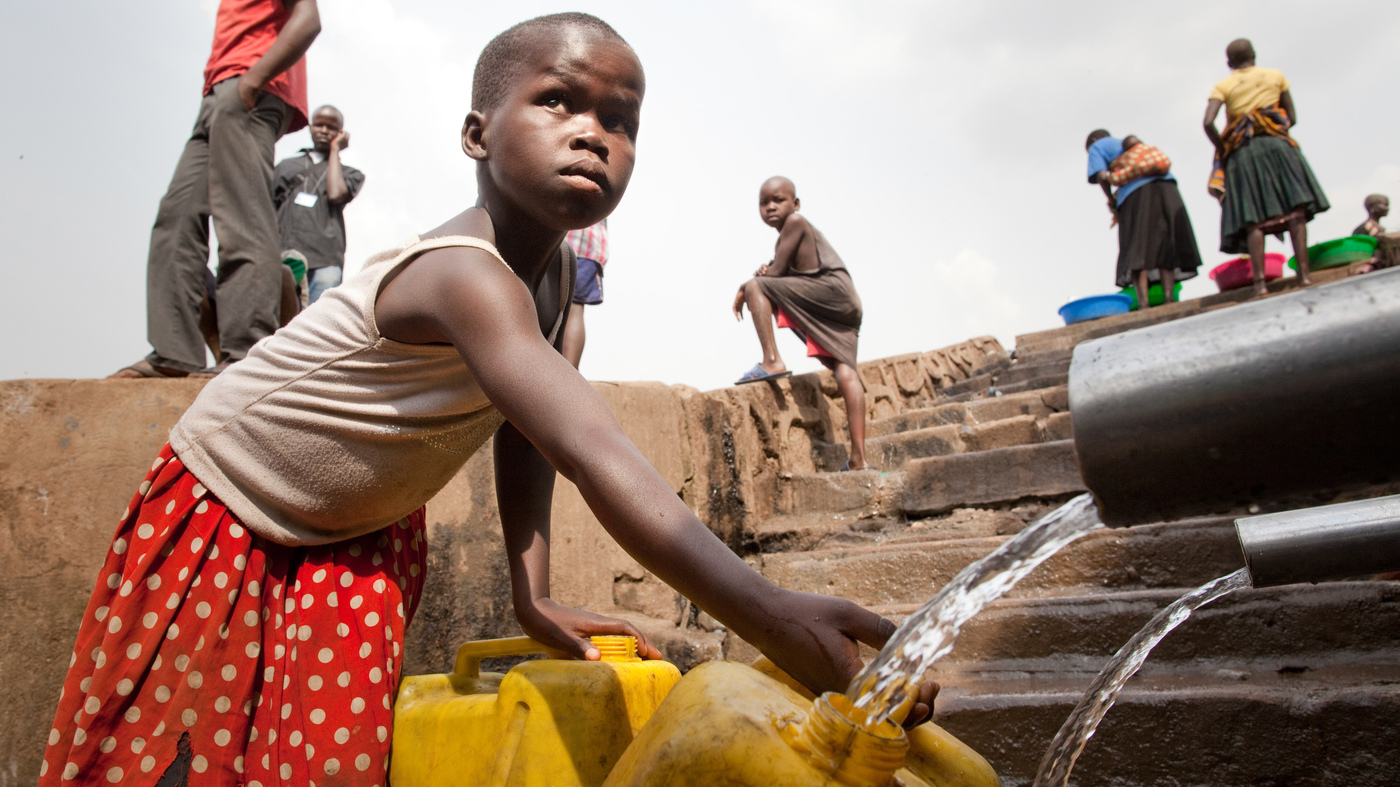
Water….for us more or less a taken-for-grantedness, for people in Nairobi’s informal settlements anything but that!

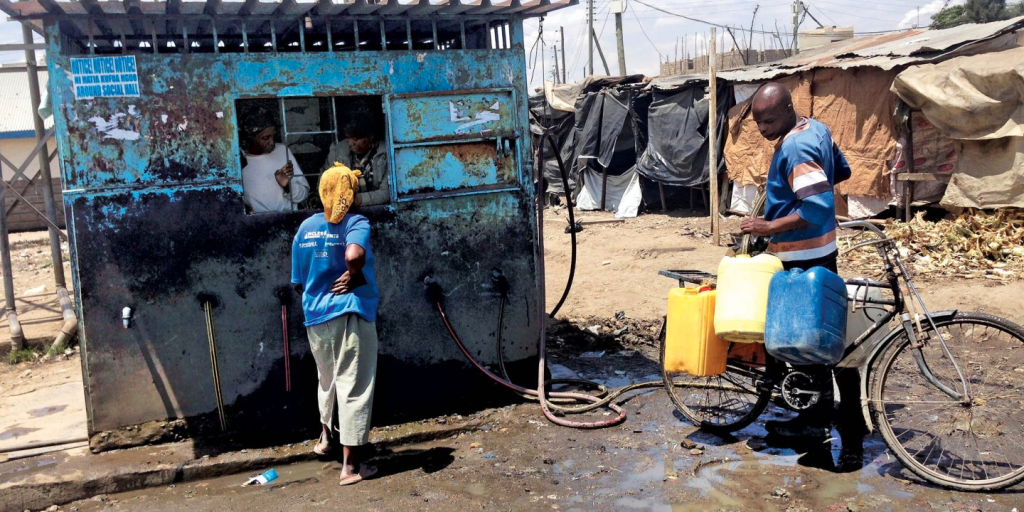
Infrastructural shortcomings, including water and sanitation supply, are amongst the main challenges inhabitants of Nairobi’s informal settlements face. The municipal water supplier estimates that only 22% of the dwellers in Nairobi’s informal settlements have their own water supply and have access to clean drinking water. The vast majority buy their water at so-called water kiosks, illustrated by this picture.

Water kiosk in Nairobi’s informal settlements: Wolfson, 2014

Some of the kiosks are operated legally. They are registered with the city, receive water from municipal pipes and have a meter to calculate their consumption. However, most of the water kiosks in Nairobi’s informal settlements are illegal. They divert water from municipal pipes with plastic hoses. The hoses often leak and are patched inadequately, which easily allows dirt to get into the water.

The water from the municipal pipes is sold overpriced. The price depends on availability. Kibera, for example, the second-largest informal settlements in Africa, only receives water two to three times a week. Due to the illegal diversions and irregular payment of the water bills, Kibera is a loss-making business for the municipal utility company and as a result, is literally turned off. Hence, connected to Kibera’s water supply is a ‘market environmentalism’, as put forward by proponents of neoliberal resource management: Resources are both economic and environmental ends in a commodified market (Bakker, 2005). There is seemingly not a lot of economic ends found amongst Kibera’s urban poor, leading to water shortages. On days when water is scarce, many families in Kibera refrain from doing the laundry or cleaning so that there is enough water left for drinking and cooking.

The introduction of public water supply and sanitation system has been under discussion for a long time. However, this poses a significant challenge for the administration. The Kenyan government tolerates informal settlement but regards the inhabitants of informal settlements as illegal settlers. The lack of land titles complicates the construction of infrastructure, and the informal settlements are financially unattractive for private investors. To find a sustainable solution that ensures adequate hygiene and fair distribution, public water supply in informal settlements is necessary – preferably through house connections. The way forward is undoubtedly initially via interim solutions such as legal water kiosks, communal sanitary facilities and other creative solutions such as water pipers passing on houses roofs with less water contamination, and less involvement of water cartel. You can watch a video about ‘water in the air’ here.

426 words

LITERAL REFERENCES:

Bakker, K. (2005). Neoliberalizing nature? Market environmentalism in water supply in England and Wales. Annals of the association of American Geographers95(3), 542-565.

VISUAL REFERENCES

Featured image: Gabrowski, U. (2019). Lack of water in Nairobi’s informal settlements. Retrieved from https://www.npr.org/sections/goatsandsoda/2019/08/13/750777462/report-theres-a-growing-water-crisis-in-the-global-south

Wolfson, E. (2014). Water kiosk in Nairobi’s informal settlements. Retrieved from https://www.newsweek.com/2014/11/21/water-project-cleans-nairobis-slum-283092.html

The Fragrant Harbour: Air Pollution in Hong Kong

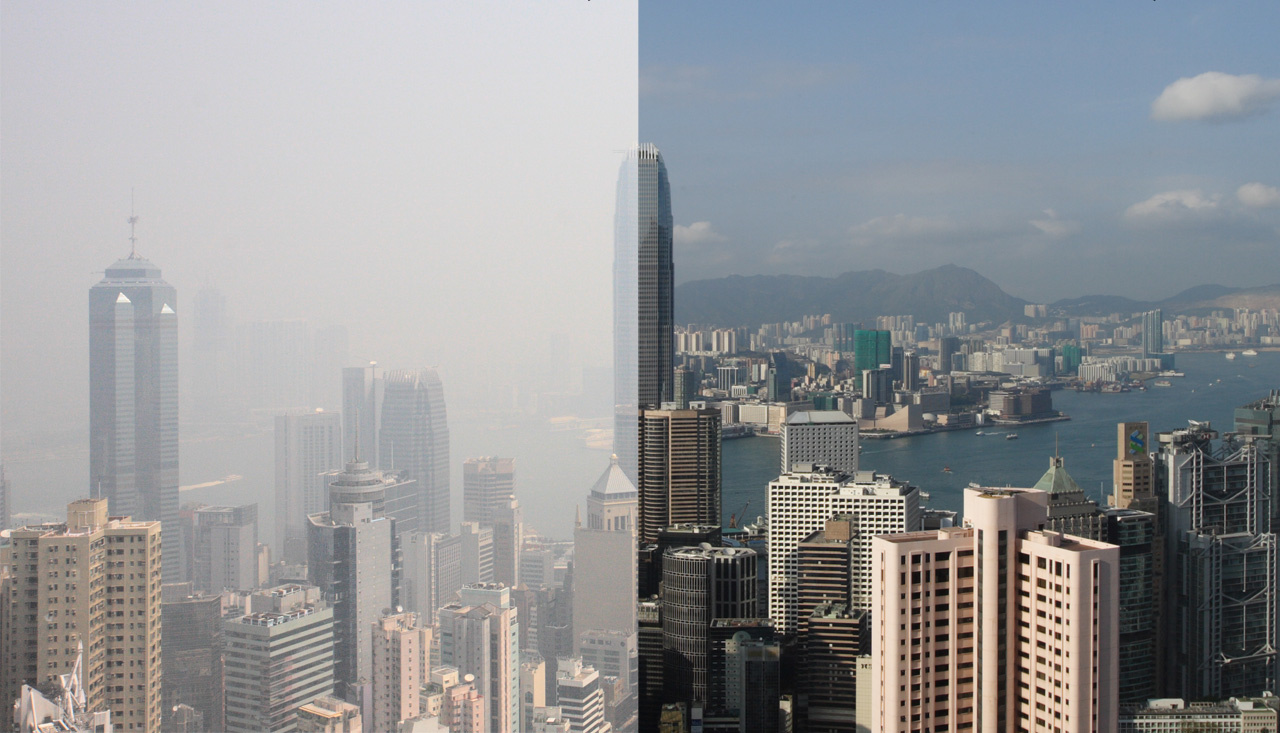
Hong Kong’s skyline, viewed from the Kowloon waterfront, is one of the most iconic in the world. The city’s Chinese name translates literally to ‘fragrant harbour’, but rather than sweet fragrances, tourists are today greeted by the pungent odour of ferry exhaust fumes; Hong Kong is notorious for its air pollution. One of the most densely populated cities on earth, Hong Kong suffers from local vehicular (shipping and road) pollution as well as foul air which drifts into the Special Administrative Region from the heavy industries on the Pearl River Delta in mainland China. Air quality fluctuates throughout the year, with prevailing north easterly winds bringing in smog from the mainland in winter, whilst ocean winds and heavy rain clear the air in summer (Zhang, 2011: 57).

It is tempting to see the haze which clouds Hong Kong’s skyline as merely an unfortunate ‘”externality” of urbanisation, modernisation, and development’ (Véron 2006: 2096), in a city, and a region, which has seen massive economic growth in recent decades. However, these underlying polluting processes may be seen as part of a system of the ‘anthropogenic manufacture of air’ (Graham, 2015: 192). Shifting our viewpoint to recognise the ubiquitous human interference with what should be a given and universally accessible resource, we can begin to see how ‘unequal power relations are “inscribed” in the air’ (Bryant 1998).

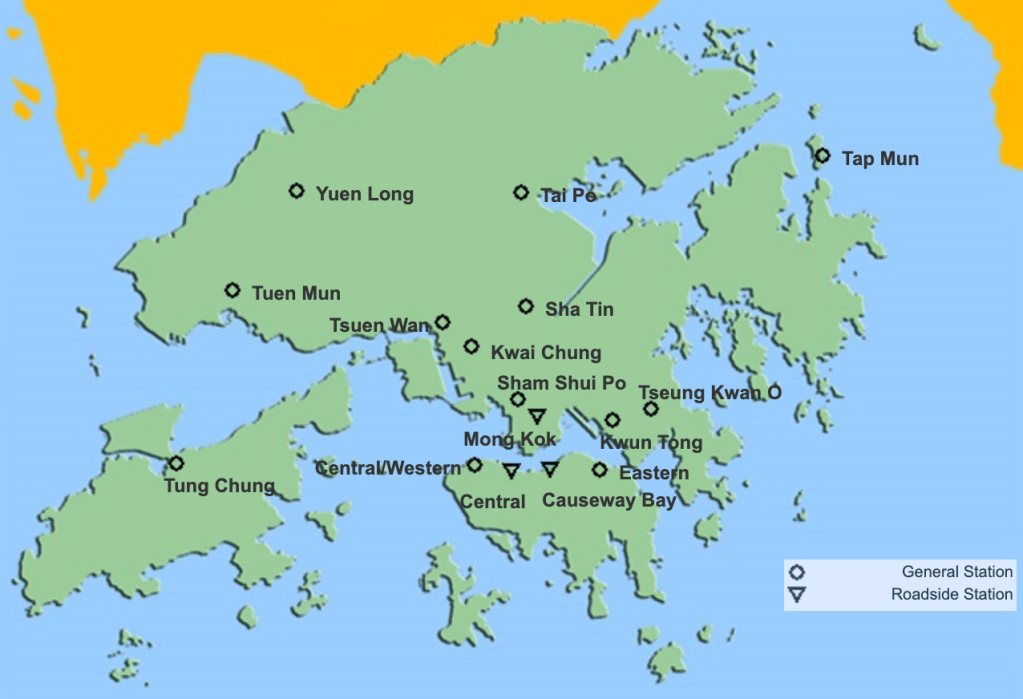
Air Quality Monitoring Stations – EPD

The monitoring of air quality in Hong Kong by the Environmental Protection Department (EPD) comprises a network of sixteen air quality monitoring stations, the city’s ‘backbone of air quality management’ (Buzzelli, 2008: 502). Monitors are located around the city (see figure 2), thirteen being classed as ‘general’ monitors, and only three as ‘roadside’ monitors. Whilst useful in providing general information and forecasts for air quality, there are obvious shortcomings in this system. The EPD website notes that the ‘general’ monitoring stations are usually located ‘at roof level 4-6 storeys high’, a height which hardly seems representative of the air which residents breathe. Meanwhile, even with the government having declared roadside pollution the ‘greatest daily health risk to the people of Hong Kong’, roadside air quality is only monitored at three locations in a city of over 7 million people.

The empirical data produced at these stations already shows frequent violations of World Health Organisation guidelines on air quality, whilst clearly not accounting for microclimates which concentrate air pollution in certain places. This includes the trapping of pollutants in canyons between densely built high-rises, with concentrations highest in the first 15m (Graham, 2015: 204). It appears, then, that official monitoring may fail to represent ‘localised human exposures to traffic pollution’ (Buzzelli, 2008: 513), in a way which downplays the risks of air pollution. The distressing reality is that 300,000 doctor’s visits in just one month were linked to air pollution in 2017.

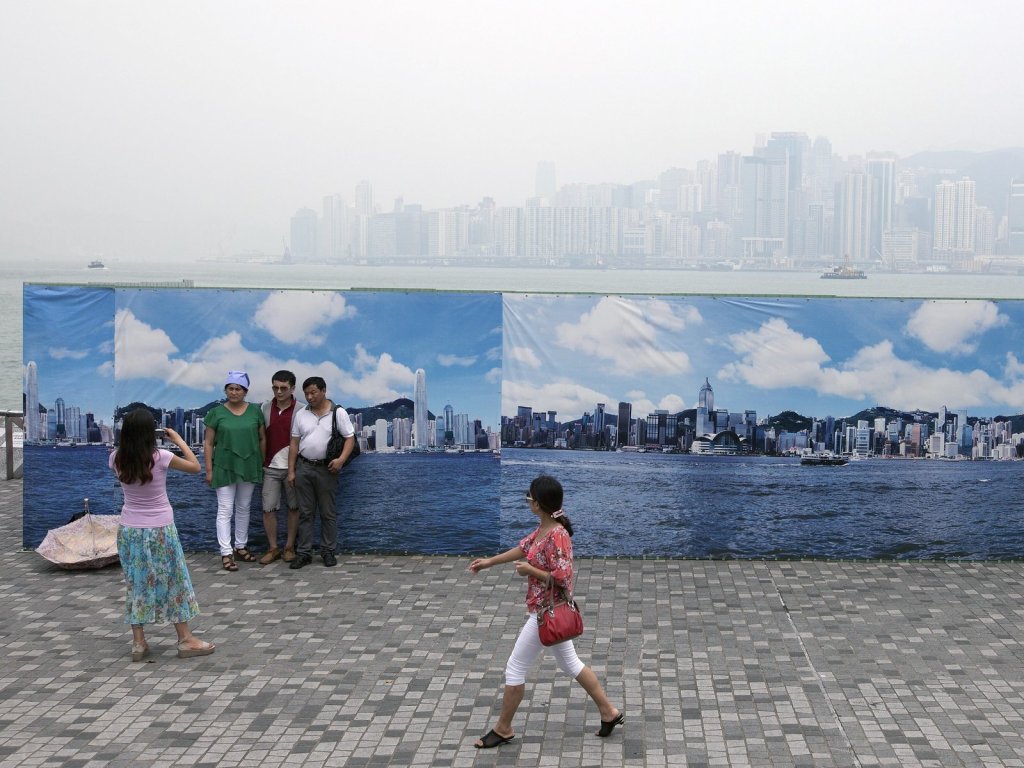
Hong Kong’s broader political landscape suggests that public health may be second to international image in terms of incentives for tackling air pollution. Government funded PR campaigns proudly brand Hong Kong as ‘Asia’s World City’, part of a concerted effort to attract the tourism, investment and wealthy working expats which are integral to the economy. In a clear example of this kind of image-threat, Timothy Choy highlighted how Hong Kong’s air nearly prevented Disney executives from giving a theme park the go-ahead, out of concern that smog would taint the cherished ‘family image’ of the Disney brand (Graham, 2015: 200). As such, we can begin to see air quality policies in Hong Kong as attached not only to public health concerns, but also to a sort of global-city vanity which prioritises capital. Such vanity manifests itself in the tacky blue-sky billboards erected on the Kowloon waterfront.

This initial look into the production of the problem of Hong Kong’s air quality is our starting point in an investigation of the political and ecological co-production of the issues facing the city. Having spent time living and working there, this exploration will be informed by my own experiences and observations of Hong Kong, alongside research into the city’s negotiated identity, and the urban injustices hidden behind its shimmering facades. Join me as I continue my encounter with the precarious political ecology of one of our planet’s most extreme manifestations of urbanism.

References:

Buzzelli, M., 2008, ‘A Political Ecology of Scale in Urban Air Pollution Monitoring’, Transactions of the Institute of British Geographers, New Series, Vol. 33, no. 4, 502-517

Graham, S., 2015, ‘Life Support: The political ecology of urban air’, City, 19:2-3,192-215

Véron, R., 2006, ‘Remaking urban environments: the political ecology of air pollution in Delhi’, Environment and Planning A, vol. 38, 2093-2109

Zheng, M., 2011, ‘Hong Kong: Particulate Air Pollution and Health Impacts’, Encyclopaedia of Human Health, 56-61

Feature Image: Tokyoahead, Wikimedia Commons, 2007: https://commons.wikimedia.org/wiki/File:Hong_kong_haze_comparison.jpg

Reclaiming urban space: The influence of the Superblock

I mentioned Barcelona’s superblocks in passing in my post on the city’s air pollution, but due to the significance of the policy in reconfiguring the urban structure of the city, this post will look into the planning, implementation and future of superblocks in more detail.

Car-dependant city planning has resulted in high levels of pollution, sedentary lifestyles, noise pollution and car dominated streets. Barcelona, like many European and global cities, is facing these issues with pollution levels exceeding the EU limits for NO2, almost 20% of children at risk of becoming overweight and 61% of the city’s residents suffering from noise that exceeds permissible limits.


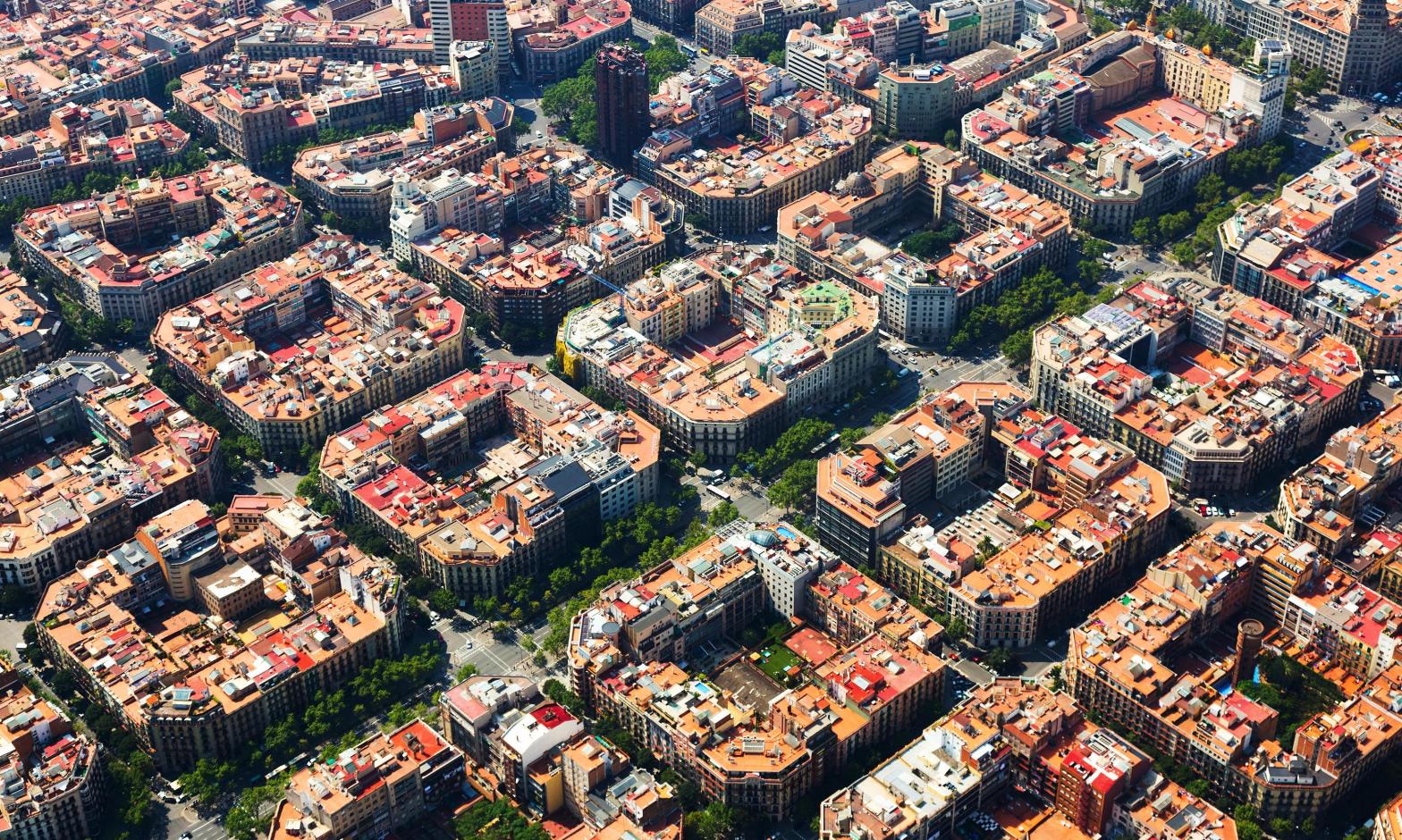
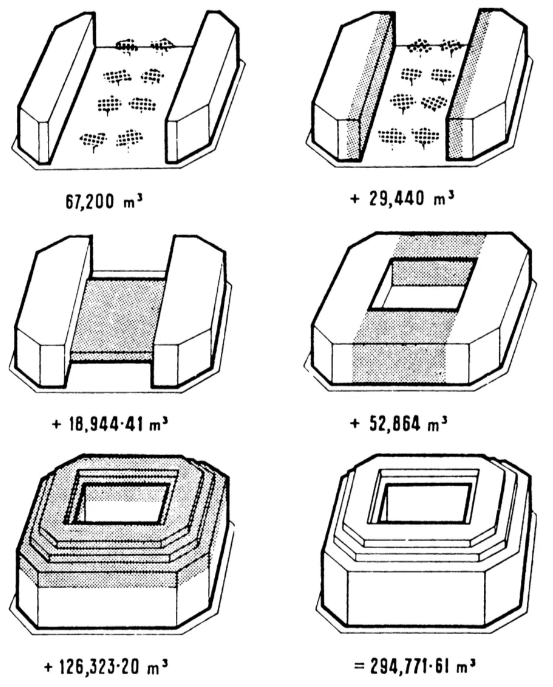
When the iconic city block structure of Barcelona was designed in the late 19th century, Ildefons Cerdà, the plan’s architect, envisioned a city that promoted diversity, social cohesion and liveability through vast amounts of public space, with the original plan reserving 50% of each block as open space. However, 100 years after the plan’s proposal, the built-up space in the average block had increased from 67,200m3 to 294,771.61m3

The infilling of Cerdà’s city blocks, from the original plan (top left) to 1972 (bottom right). Source: Vox

The superblock plan of today’s Barcelona builds on Cerda’s vision, combining 9 blocks and limiting the use of cars on internal roads, re-producing public space for culture, leisure and community.

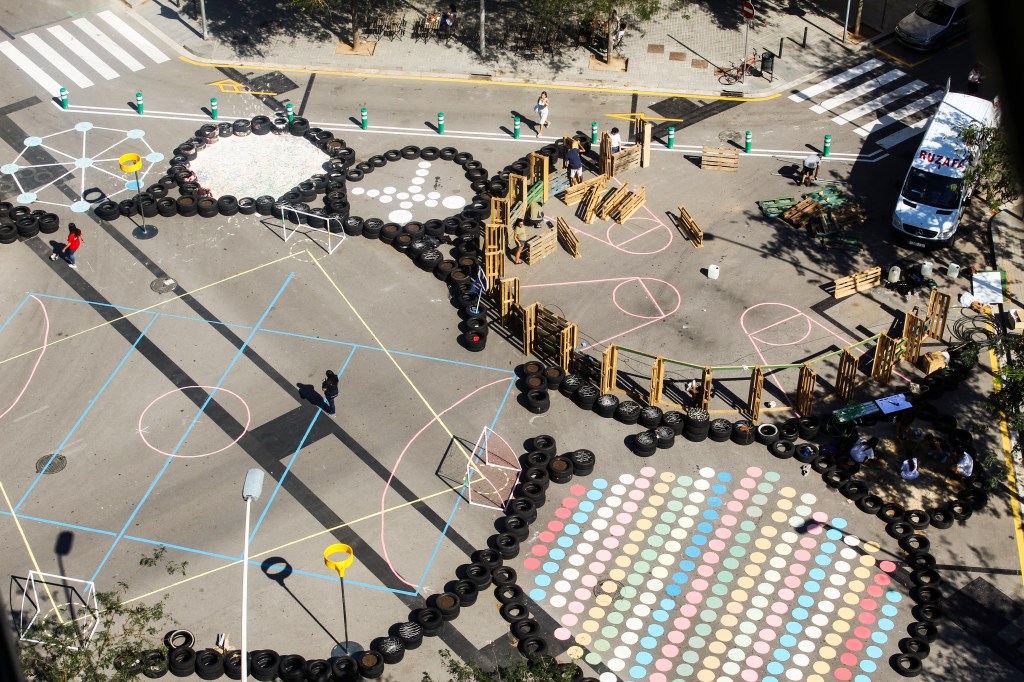
Barcelona’s first superblock was created in the Poblenou district in 2016. It was originally built with no new permanent infrastructure; using tires, paint and potted plants to create new public spaces that could be re-imagined by the neighbourhood’s residents. There was initial opposition against the creation of the superblock, but six months after the introduction of the first superblock, following extensive public consultation, attitudes turned around and the city built a more permanent playground, planted green spaces and added picnic tables.  

The Poblenou superblock in its inital, temporary form. Source: Vox

The city has so far built 6 superblocks, all of which are unique and have been developed with the help of local communities. The public were able to have a direct impact on the design process via the SuperBARIO platform – a gaming interface that collects user feedback on the design of public space, collecting data about citizen’s needs, desires and proposals. This data was then used to create the public spaces within each superblock, directly influenced by those who will use it daily.  


Despite the initial opposition to the scheme, the superblocks are now seen as environmental, social, health and economic successes, and there are plans to implement another 503 superblocks throughout Barcelona.  

If all the planned superblocks are realised, private vehicle use is estimated to decline from the current 1.2 million trips per week to 230,000, due to an uptake in public transport, walking and cycling. This in turn is predicted to reduce nitrogen dioxide levels, which are currently 47 micrograms, by 23%, bringing them below the legal limit of 40 micrograms set by the EU. The health benefits the superblocks will provide via improved air quality, reduced temperatures, increasing social cohesion and promoting more active lifestyles are predicted to increase the life expectancy of the average Barcelona resident by nearly 200 days, and prevent 667 deaths per year.  


Barcelona’s superblocks are re-creating the city, turning previously vehicle-dominated streets into places where communities come together and children play, re-imagining city life. To find out more about the superblocks and get a real idea of what it’s like to experience them and the change they have had to city life, take a look at the video below, created by StreetFilms.

Who to Blame? Privatization and Water Insecurity in Metro Manila

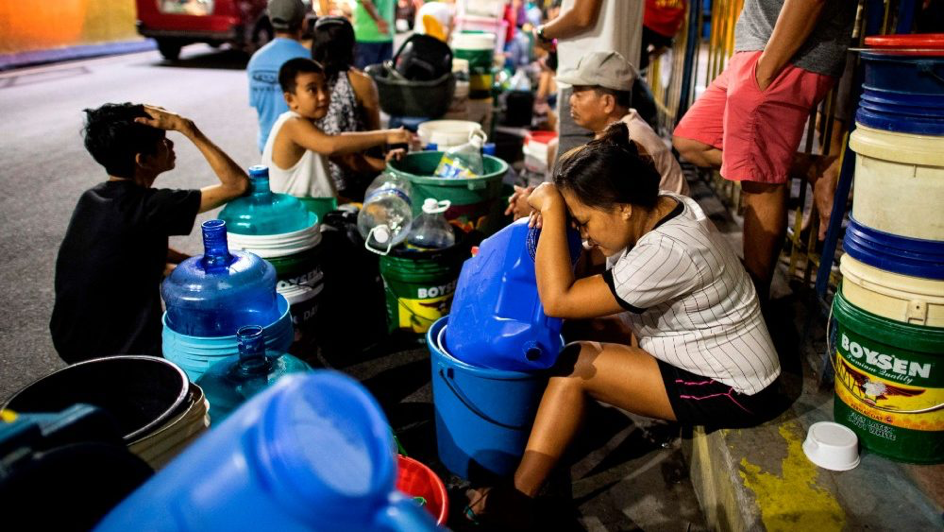
In 2017, Thames Water made headlines for being fined £20 million for mismanaging sewage water. The company’s opaque financial structure was then exposed (Plimmer & Espinosa 2017). While privatization initially allowed major investments, the service deteriorated rapidly and significantly damaged the environment. In March and June 2019, two water shortages hit Manila for several weeks, highlighting the insufficient quality of the infrastructure. The city is known to have achieved the world’s largest water privatization operation in 1997. It faced the need to largely expand its coverage as population grew exponentially (+300% in 40 years) (Porio, 2012). The alarming situation of water security in Manila is to be taken as a warning against postpoliticizing the provision of vital services.

Manileños queue to secure their water provision
Source: Vatican News, 19/03/2019

Initially, the Metropolitan Waterworks and Sewerage System (MWSS) Regulatory Office boasted of the success of the operation: from 67% in 1996, private companies reached almost universal coverage (98%) in 2013 (Cheng, 2013). Manila then appeared to be in a position to provide durably for safe and affordable drinking water for all. However, in just a few years, water security has steadily deteriorated.

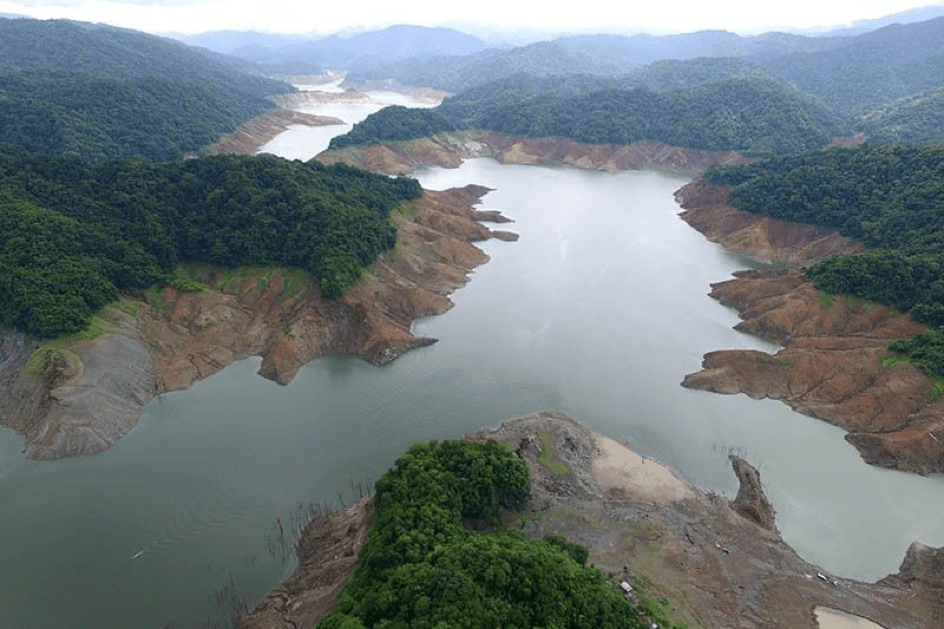
Angat Dam reached a record low in 2019.
Source: The Philippine Star, 11/07/2019

According to the company in charge, the shortage was due to the limited capacity of the pipes. Indeed, few investments have been made with a long-term vision. The water supply of the metropolis of almost 30 million inhabitants relies for 97% on a single source, the Angat Dam, whose level reached a record low in 2019 (Cabico 2019), suggesting that it will not cover the needs of the Manileños for very long. The ongoing projects to diversify water sources are very limited. The desalination plant currently in construction should reach a maximum supply capacity of 100 MLD, representing 2.5% of Angat Dam’s provision (Padilla 2019).

In order to avoid the monopoly situation experienced by Thames Water in London, the service has been shared between two companies, Maynilad and Manila Water, which respectively supply the East and the West side of the city (Hawk 2005: 551). However, this system did not prevent irresponsible resource management and even slowed down the resolution of the crisis in 2019, as the opening of the canals to move water from one side of the city to the other took several days.

Unlike Thames Water, which is more than 80% foreign-owned, the financial structure of the companies in charge in Manila is more balanced between foreign and domestic capital, thanks to the shares of Ayala Corporation, the largest Filipino company (Wu and Malalun, 2008). However, the Ayala conglomerate owns a significant share of available land in Manila, and it is known to use its key role in the design of urban infrastructure projects – including water and transportation – to orientate public investment towards its own land (Lorrain & Mouton 2017).

Therefore, it seems that neither the avoidance of a monopoly, nor the presence of national investors in the financial structure of the companies in charge can guarantee a responsible management of water resources. Rather, the ultimate issue lies in governance structures framing the city’s planning.

Indeed, Manila and London are both examples of fragmented governance, leading them to behave as “growth machines” according to the principle of “entrepreneurial municipalism” (Harvey 1989; Lauermann 2016). In both cities, power is distributed between many government agencies and Public Private Partnerships (PPPs), and the mayors have to work with many (mostly private) partners (Gordon & Travers 2010). In Manila, this is a major limitation to effective urban governance (Boquet 2014). Manila seems to speak to other entrepreneurial cities about the risks of privatizing sensitive services like water provision. As long as there is no clear authority in charge of a strategy to diversify Manila’s water sources and to hold private investors accountable, insecurity around water resources will accentuate tensions in the city.

Wordcount: 633

Resources used:

Images:

Featured image: Vatican News (March 19, 2019). Cardinal Tagle urges prayers for Manila’s water crisis. Retrieved from: https://www.vaticannews.va/en/church/news/2019-03/tagle-manila-prayer-rain-water-crisis.html

Cabico, G. K. (July 11, 2019). Angat water level dips to critical anew. In: The Philippine Star. Retrieved from: https://www.philstar.com/headlines/2019/07/11/1933867/angat-water-level-dips-critical-anew

Gomes, R. (March 19, 2019). Cardinal Tagle urges prayers for Manila’s water crisis. In: Vatican News. Retrieved from: https://www.vaticannews.va/en/church/news/2019-03/tagle-manila-prayer-rain-water-crisis.html

Text:

Boquet, Y. (2014). Les défis de la gouvernance urbaine à Manille. Bulletin de l’association de géographes français, Géographies, 91(91–4), 461–478.

Cabico, G. K. (July 11, 2019). Angat water level dips to critical anew. In: The Philippine Star. Retrieved from: https://www.philstar.com/headlines/2019/07/11/1933867/angat-water-level-dips-critical-anew

Cheng, D. (2013), “(In)visible urban water networks: the politics of non-payment in Manila’s low-income communities”, Environment and Urbanisation, 25 (1), pp 246-260

Cheng, D. (2014). ‘Persistence of Informality: Small-scale water providers in Manila’s post-privatization era’, Water Alternatives, 7(1):54-71.

Gordon, I.R., & Travers, T. (2010). London: Planning the ungovernable city.

Harvey, D. (1989). From Managerialism to Entrepreneurialism: The Transformation in Urban Governance in Late Capitalism. Geografiska Annaler. Series B, Human Geography, 71(1), 3–17.

Lauermann, J. (2016). Municipal statecraft: Revisiting the geographies of the entrepreneurial city. Progress in Human Geography.

Lorrain, D., & Mouton, M. (2017). Portrait d’Entreprise. Les conglomérats familiaux (5): Ayala Corporation. Flux – Cahiers scientifiques internationaux Réseaux et territoires, 1(107), 91-103.

Padilla, A. (March 17, 2019). Privatization is creating an artificial water shortage. https://www.bulatlat.com/2019/03/17/privatization-is-creating-an-artificial-water-shortage/

Plimmer & Espinosa (May 4, 2017).  Thames Water: the murky structure of a utility company. In: Financial Times Online. Retrieved from: https://www.ft.com/content/5413ebf8-24f1-11e7-8691-d5f7e0cd0a16

Porio, E. (2012). Decentralisation, Power and Networked Governance Practices in Metro Manila. Space and Polity, 16(1), 7–27.

United Nations General Assembly (2010). Resolution adopted by the General Assembly on 28 July 2010, A/RES/64/292, Sixty-fourth session, Agenda item 48.

World Bank (May 15, 2012). Press Release: World Bank Approves US$275M Financing for Better Sanitation Services in Metro Manila. Retrieved from: https://www.worldbank.org/en/news/press-release/2012/05/15/world-bank-approves-275M-for-metro-manila-wastewater-management-project

Wu, X. and Malaluan, N., (2008). ‘A Tale of Two Concessionaires: A Natural Experiment of Water Privatization in Metro Manila’, Urban Studies, 45(1):207-229.

Zhang, Yan; Webster, Douglas; Gulbrandson, Andrew; Corpuz, Arturo G.; Prothi, Amit; Nebrija, Julia Catherine. 2014. The Metro Manila greenprint 2030 : building a vision (English). Washington, D.C: World Bank Group.

The Vital and Chaotic Infrastructure of Trash in Dakar

Today more than half the world’s population lives in urban areas. This rapid urbanisation has been particularly difficult in so-called ‘developing world’ which have “neither been able to plan for nor to keep pace with this transformation“. In Africa, which is the most rapidly urbanising region in the world, population increasingly lack access to basic services.

As Senegal’s capital, Dakar is a place of numerous challenges. The city concentrates 25 percent of the Senegalese population and 80 percent of its economic activities. Despite its many assets, Dakar struggles with a deficit of proper infrastructure and adequate services since the city has been developed without any urban planning.

Within a context of modern economy and rapid urbanisation, the increasing volume and complexity of waste pose a serious risk to ecosystems and human health. While Dakar is “the main solid waste producer in Senegal with about 2,000 tons of solid waste per day“, waste management still needs to be aligned with the amount of waste generated. In the waste sector, Dakar’s policies has been affected by a significant structural volatility. During the post-colonial period, waste management practices have been restructured at least twelve times and reached an unprecedented instability during Abdoulaye Wade’s tenure. Over time, responsibilities for waste management have shifted between public and private sectors without clear roles for each stakeholder, while regulations have never been sufficiently enforced.

Over the last twenty-five years, Dakar has been periodically submerged in garbage. From 2006 to 2012, the city witnessed major waste crises and oscillated between tidiness and insalubrity due to strikes from waste-workers accompanied by dumping into the public space from citizens. This local dynamism in an African city tends to prove wrong those who depict the urban African as a passive victim with no role or mean of action in global dynamics. These ‘trash revolts’ were concerted acts of protest against the state and its officials in the ways they compensated waste-workers and more broadly managed public services. “Dakar’s garbagescape has become a central terrain of contestation of the legitimacy of the Senegalese state” which devolved infrastructural responsibility to workers and communities.


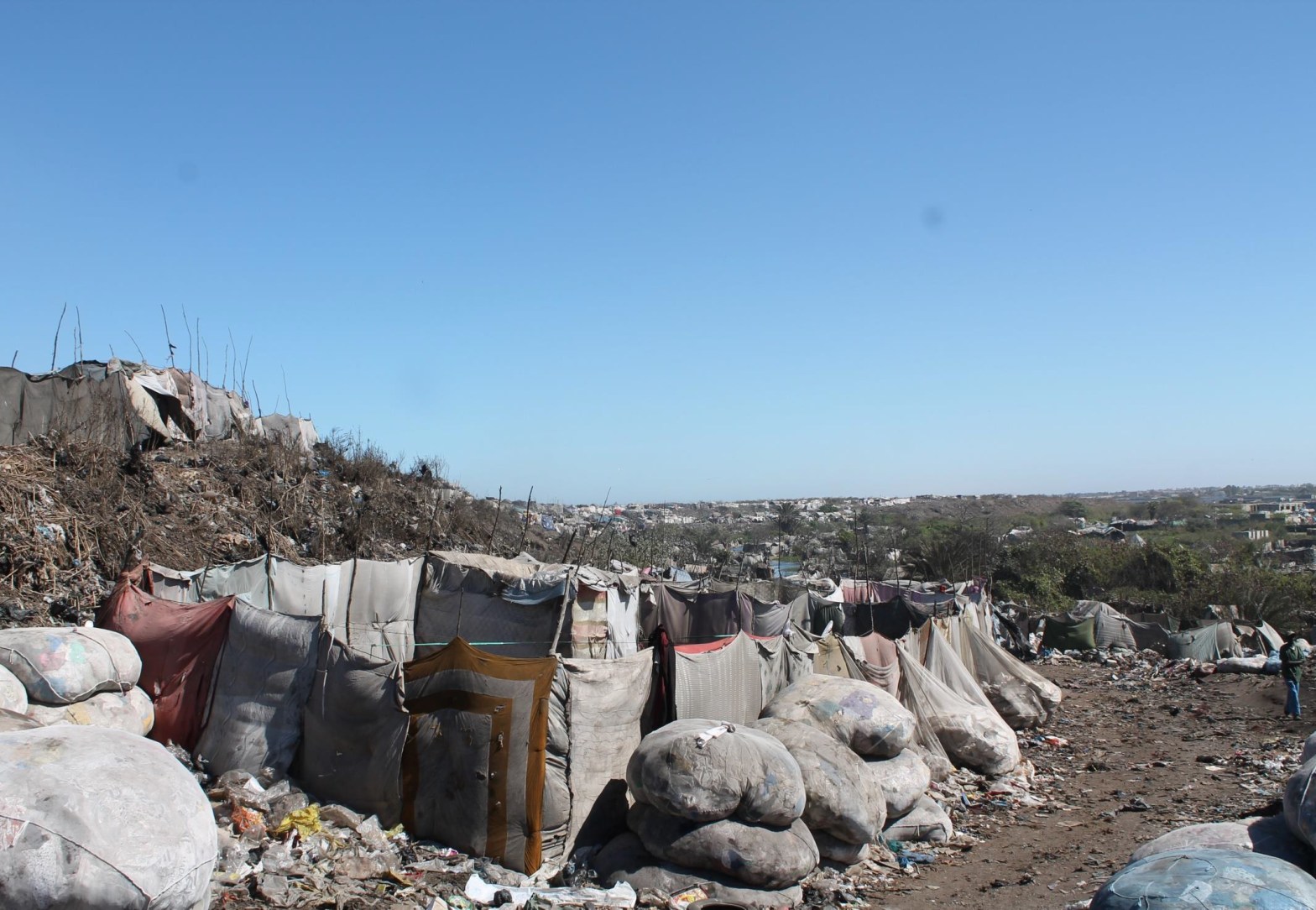
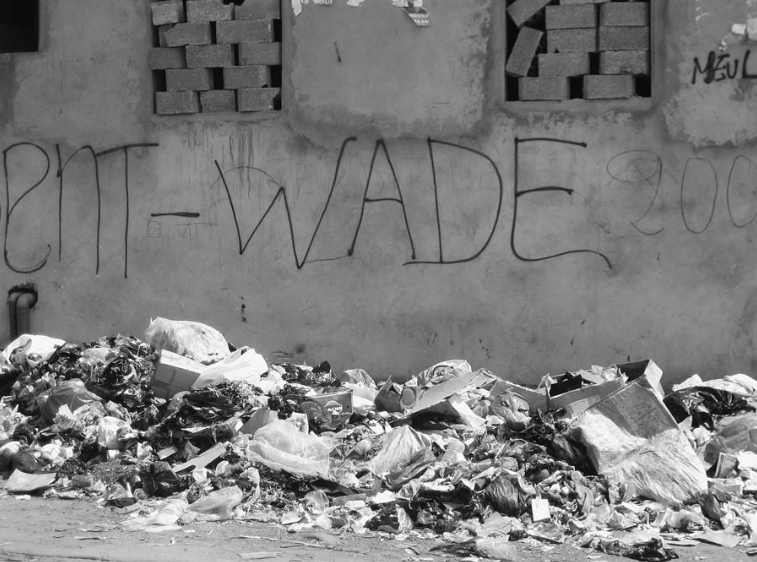
Remnants of the trash revolts spearheaded by Dakar residents in May 2007.


In Dakar, solid waste management is inadequate and inefficient. First, households are not properly equipped to store their waste leading to uncontrolled burning and dumping in the streets or illegal dumpsites. But challenges mainly lie at the government level with no clear and specific laws, a lack of delimitation between national and municipal obligations, constrained financial resources and ineffective planning. Indeed, less than half of Dakarois households have access to a regular collection system of garbage which most of it is disposed of at Mbeubeuss dumpsite. Located 30 kilometres from the city centre, the largest dumpsite of Senegal covers more than 114 hectares where waste is only compacted without any treatment.

https://www.youtube.com/watch?v=vFPg8CyPx0Q&t=535s


While plastics, metals and whatever else can be reused are a source of livelihood for informal collectors and recyclers, many inhabitants from the Malika suburb, which is home for the open dumpsite, protest against its unsafe management. The poor sanitary conditions expose them to highly toxic substances through atmospheric pollution but also contamination of their water supply. Moreover, improperly managed waste lying in the streets or dumpsites increase the risk of infectious diseases spread by animals. Since 2015, Mbeubeuss is supervised by the state which pledged to rehabilitate the site without communicating any deadline for its implementation.

Interventions have to be made at both policy and community levels to address the problem of poor waste management in the city. First, municipal authorities should provide households with closed containers for storing waste as well as organise waste collection in collaboration with the national government. Furthermore, sorting, recycling and composting may help reduce the amount of waste, like has been done in ‘developed countries’. Last but not least, local and national authorities have to allocate enough financial resources for waste management and improve the working conditions of waste-workers.

But this urban issue is more complex than it seems. For instance, the proposed closure of Mbeubeuss and opening of a new high-tech landfill has been fiercely contested by the community of waste pickers who depend on garbage as their primary resource to make a living. In Dakar, waste infrastructure thus appear as a key challenge of the city’s urban political ecology.

Don’t you know that you’re toxic? Water pollution in Nairobi’s informal settlements

Water and Air, the two most essential fluids on which all life depends, have become global garbage cans

~Jacques-Yves Cousteau

Welcome to this week, in which I will post some blogs surrounding water in Nairobi’s informal settlements. It will get exciting, unhygienic, and probably unbelievable for us in Europe!

Walking through Nairobi’s informal settlements myself, the biggest shock for me was to see the amount of pollution there was in the rivers. The following picture is a picture I took myself in Kibera, indicating the level of the river’s pollution.

Bildergebnis für Nairobi slums map
Kibera informal settlement. Source: Author

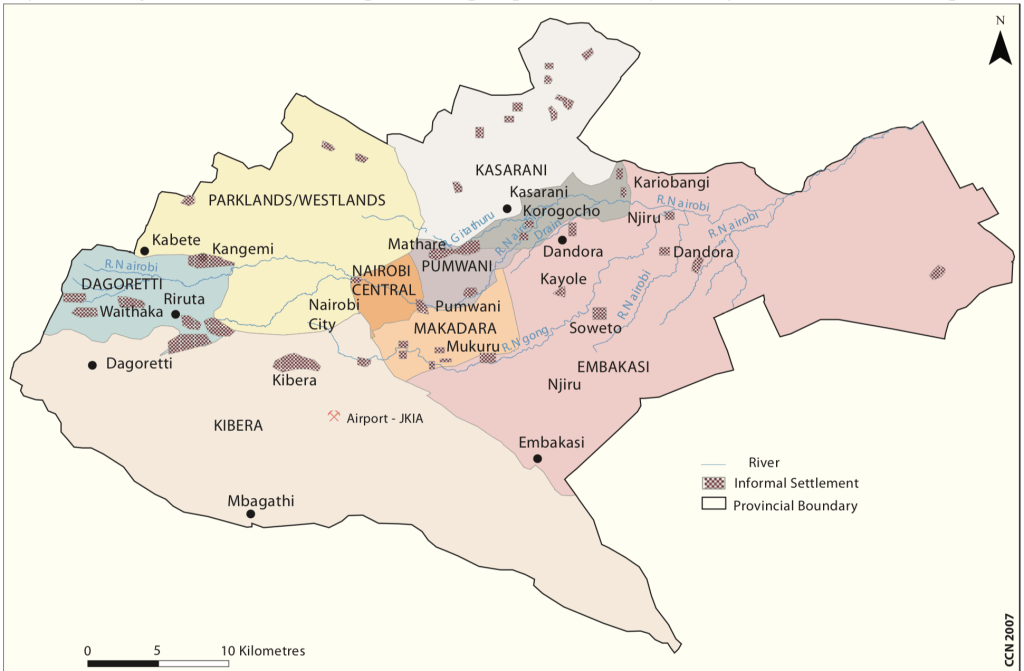
Below I have inserted the map again from the very first blog post, showing Nairobi’s informal settlements and the distribution of the main rivers in the city.

Distribution of rivers in Nairobi’s informal settlements. Source: UN, 2009

Given the pollution of the rivers in Nairobi’s informal settlements, the water quality of Nairobi’s river is deficient.

There are high levels of harmful materials found in Nairobi’s rivers and its tributaries, far beyond the levels allowed by the WHO. These materials include chromium, lead, zinc, copper, and manganese. Furthermore, there are excessively high levels of harmful bacteria, such as E.coli found in water. The harmful bacteria leads to outbreaks of water-borne diseases including cholera, typhoid, and dysentery. Reasons for the excessively high numbers of harmful pollutants and bacteria are the industries neighbouring Nairobi’s informal settlements, as well as human waste, including excrements. I will explore the latter in the next blog entry. The waste occurring can be ultimately traced back to Kenya’s non-existent disposal system.

Have a look at the video below which exemplifies the pollution of the Nairobi river.

https://www.youtube.com/watch?v=MYEH67qx54A&t=4s

As indicated in one of the very first blog entries on air pollution, waste management is a central concern for Nairobi. Some policies govern wastewater purification; however, they are not followed correctly, thus causing the high levels of heavy metals. Given the industries’ close proximity to informal settlements, the concentrations of heavy metals are particularly high in these areas of the most marginalised.

Pollution impact

The inhabitants of Nairobi’s informal settlements suffer the most from the pollutants in Nairobi’s river and its tributaries. People who rely on the river are particularly exposed to health hazards, including farmers and people living very close to the rivers who use the polluted water and sewage flows for irrigation. Lead, for example, affects the mental development of children, compounds like chromium are carcinogenic, and cadmium damages kidneys.

A lot needs to be done!

Improving the water quality of Nairobi’s river goes hand in hand with a lot more tasks that need to be done! The government needs to put in place a waste disposal system, that includes fines for companies’ industrial waste. There is a further need for an adequate sanitation system, as well as the need for more wastewater treatment plants, handling the waste produced.

471 words

VISUAL REFERENCES

Featured image: Pinterest (n.d.) Water Pollution in Nairobi’s informal settlements. Retrieved from https://www.pinterest.de/pin/341007003028044624/.

United Nations Environmental Programme (2009). Nairobi’s informal settlements. Retrieved from https://www.uncclearn.org/sites/default/files/inventory/unep23.pdf

The conflicts and competition in the history of Barcelona’s water supply

Barcelona’s temperatures are increasing and the hottest periods are becoming more frequent, whilst rainfall in the city is become increasingly less regular. In 2008, Barcelona almost ran out of water and had to resort to importing water in vast quantities. In order to avoid another water emergency, the city needs to adapt. Much of the city’s water system is dated and dysfunctional, with reports of faulty systems loosing up to 800,000 litres a day.  

Problems in Barcelona’s water supply are not new; the history of the supply has been ridden with competition and conflict, with the city’s intermittent population and urban growth since the late 19th century having triggered multiple struggles over water supply and water rights in the city.  


In the late 19th century, Barcelona’s rapid urban expansion beyond its medieval walls and industrial growth required an increase in the city’s water supply for both domestic and industrial use. Before this point, most of the city’s water came from the mine of Montcada, a local source, via an aqueduct. However, the urban expansion covered this and a new water supply from the Besòs River was secured under the management of the private company Sociedad General de Aguas de Barcelona (SAGB). The period of between the late 19th century and the beginning of the Spanish Civil War (1936-39) was characterised by the struggle between private and public interests in the ownership and management of water, debating whether water should be seen as a public resource to be equitably distributed, or whether it was a private good, owned and sold according to market rules.  

Map of the rivers of Catalonia. Source: Calameo. Annotations by author.

Over the 1940s and 1950s there were significant improvements in the city’s infrastructure, doubling the number of customers connected to the water network. To secure the city’s water supply, the 1957 Water Plan for Catalonia proposed the Ter River as a new source for the city, which was successfully achieved, despite the opposition to the plan, in 1966. Once again, the rapid growth in the city’s population and economy in the 1960s led to issues in the supply, leading to the proposal of the Ebro River, 200km south of Barcelona, as a new source for the city. However, this was dismissed due to opposition from the regions around the Ebro and the economic recession of the 1970s-80s.  

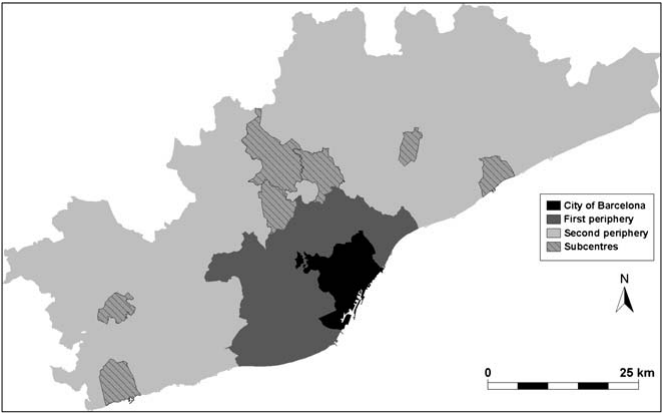
Between the 1980s and the turn of the century, the population of Barcelona remained relatively stable at around 4.2 million, although there was a significant spatial redistribution towards the outer periphery of the city. Despite the stable population, the change in lifestyle of much of the population, to low-density single homes with gardens and swimming pools, increased water demand in the city once again, with the city declaring five drought warnings between 1990 and 2005, restricting water use.

Metropolitan Region of Barcelona. Source: Masjuan et al., 2008.

In Barcelona’s most recent water crisis of 2008, the city almost ran out of water, with reservoir levels dropping to 18% – at 15% the water in the reservoirs would no longer be drinkable. The city implemented hosepipe bans, drained public fountains and urged residents to conserve water. The city council proposed two solutions: importing water internationally from Marseilles, and domestically from Tarragona, a port city to the south of Barcelona; or building an emergency pipeline to transfer water from the Ebro River to Barcelona. Both plans were met with hostility, and just as the shipments of water began to arrive at the city, Barcelona’s water situation began to improve with heavy rainfall increasing reservoir levels to 30% – still below average, but safe enough to scrap the plan for the emergency pipeline.  


The importing of water into cities is not rare, but has happened across Spain and many other countries around the world, leading to the outbreak of “water wars” as different regions scrabble for extra supplies.  

Water is one of the most essential resources cities need in order to function. The conflicts, inconsistencies and competition around the city’s water supply are not unique to Barcelona, but demonstrate capitalism’s inability to organise fundamental resources, and similar issues can be seen in the water supplies of countless cities around the world.  

How long must we hold our breath? Air pollution in Nairobi’s informal settlements

The German thinker Peter Sloterdijk (2009) describes how humans ‘manufacture’ their own air – air that is of existential value for “a species which expires without air in two or three minutes” (p. 32). How humans’ air is manufactured is thus of incalculable value for us to survive (Graham, 2015). Nowadays, it is uncontested that air pollution affects everyone of us, whether we are comparing a highly ‘developed’ city such as London, or the relatively less ‘developed’ city of Nairobi. However, while air pollution does not have any boundaries, it impacts some populations more than others.

When conducting my dissertation research amongst others in the informal settlement Mukuru, I could experience the polluted air literally everywhere: in the narrow alleys, when taking ‘Matatus’ (public buses) or in peoples’ private housings.  During my stay in Nairobi, the polluted air led to severe headaches. It turned out to be the factor I most disliked about my otherwise pleasant stay in Nairobi. Situations arose in which I almost threw up from the stench of burning rubbish. Hygienic cloths which I had in the deepest pockets of my jacket and which I held in front of my nose helped me out of these situations. I often felt caught between either holding my breath or inhaling carcinogenic substances. So, what must it be like for people who don’t have a choice but to breathe this polluted air every day?

Well, in the dense urban informal settlements of Nairobi, particulate matter which is one of the air pollutants of primary concern for human health depicts a major health hazard for the marginalised communities. Air pollution arises from outdoor air pollution through industries, agriculture or traffic as well as indoor air pollution resulting from cooking and using solid fuels, including wood and charcoal.

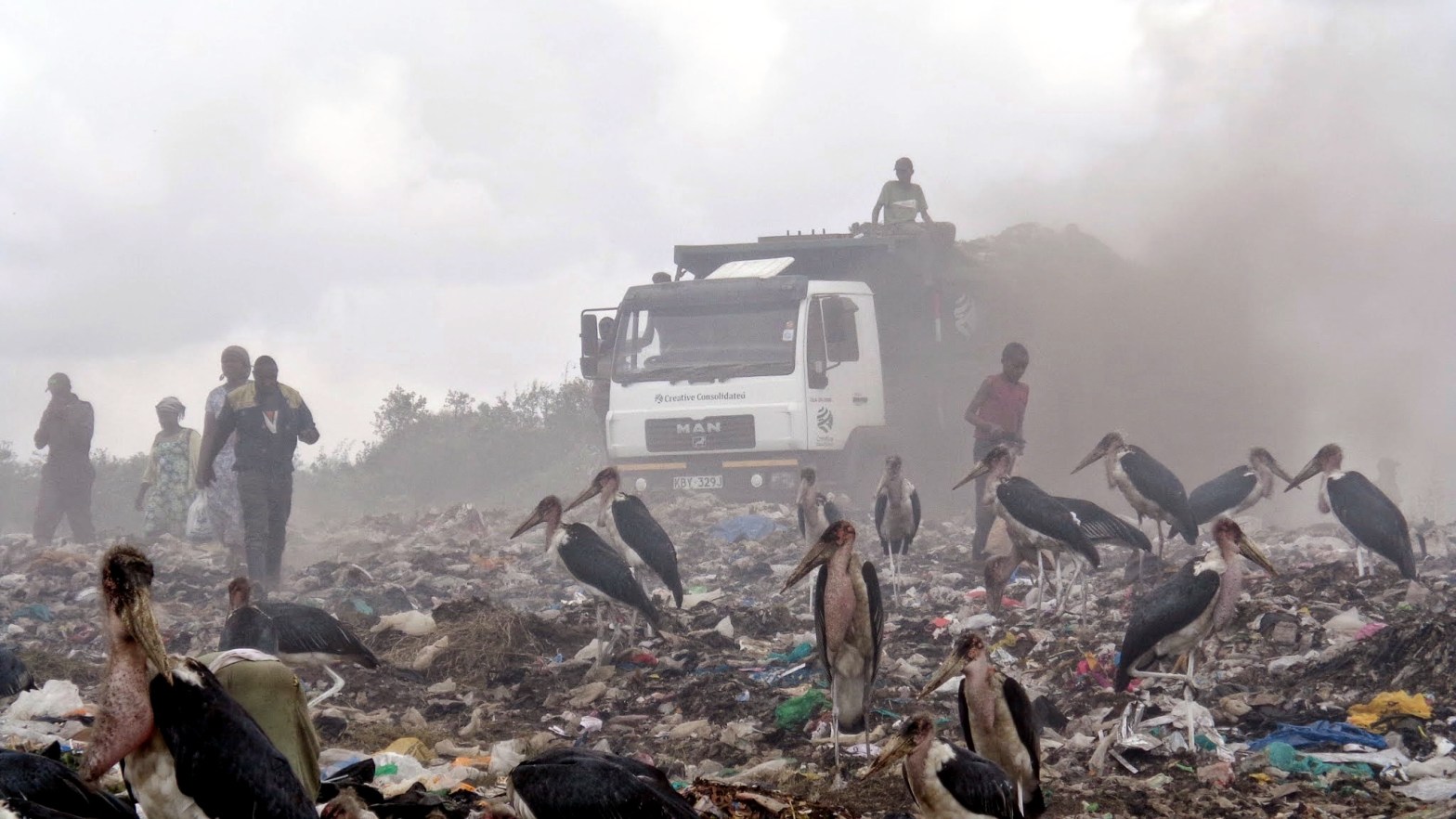
There is a correlation between poverty levels and the level of air pollution. For instance, reasons for the high levels of air pollution in Nairobi’s informal settlements are their location close to busy roads. Informal settlements are further often located next to dumpsites. The video below by UN-Habitat points out how the burning of e-waste pollutes the air with mercury, harming the nervous system. The video shows Dandora dumpsite located in the heart of the informal settlements Korogocho, Baba Ndogo, Mathare and Dandora, covering over 30 acres.

https://twitter.com/unep/status/1065263423527813122?lang=de

The close proximity of informal settlements to industrial areas where people work furthermore impacts high levels of air pollution. The map below highlights the close proximity of Nairobi’s main industrial area to the informal settlements that are referred to as high-density habitation here.  

Map of Nairobi County showing Meteorological Stations, Road Network and Land use patterns. The city is the major commercial and industrial centre of the country and the East African community region. It serves as the regional and international headquarter for several commercial and public institutions that include multinational companies and United Nations agencies (Ottichilo, 2010). 
Air pollution in Nairobi’s informal settlements: Weche, 2019

Sources of indoor air pollution in Nairobi’s informal settlements are housing features and individual behaviours. Informal settlements are coined by a high intensity of buildings. Households are generally single rooms with a door and a window eventually. Hence, households are the kitchen, living room and bedroom simultaneously. Most inhabitants rely on charcoal and wood for cooking as well as kerosene (paraffin) for cooking and lighting. The poorest of the poor further use plastic, cloth rags or other unconventional fuels. The use of these fuels leads to high concentrations of harmful air pollutants in the households of Nairobi’s informal settlements (Dianati et al., 2019).

UPE research has pointed out the importance of participatory modelling for inhabitants to gain information about certain issues and feel like being part and responsible for a community. An argument put forward by advocates of participatory environmental modelling is that people living in democratic states simply have a right to a participatory role in society (Yearley et al., 2003). The following video demonstrates research conducted by the Stockholm Environment Institute (SEI) through citizen science in the informal settlement Mukuru. Here, the location of Mukuru close to the particularly crowded Mombasa Raod as well as to Nairobi’s industrial zone leads to high levels of air pollution that cause respiratory diseases like asthma and deteriorate chronic diseases such as tuberculosis. The video demonstrates that inhabitants of Mukuru often did not know about the quality of air surrounding them. Only through SEI’s project, the participants have gained more information about air pollution.

https://www.youtube.com/watch?v=26RtAcLUjE0

Participatory methods do not stop with participants of the projects obtaining more information. It is also the sharing of information with neighbours that is of crucial importance for the community. This is often done through street art as just mentioned by Joseph Waweru in the video as well as through community songs like the one you can listen to below. Enjoy the song and until next time!

https://www.youtube.com/watch?v=AtH0-NreUxA

757 words

LITERAL REFERENCES

Graham, S. (2015). Life support: The political ecology of urban air. City19(2-3), 192-215.

Sloterdijk, P. (2009). Terror from the Air, trans. Amy Patten and Steve Corcoran.(Los Angeles: Semiotext (e).

Yearley, S., Cinderby, S., Forrester, J., Bailey, P., & Rosen, P. (2003). Participatory modelling and the local governance of the politics of UK air pollution: a three-city case study. Environmental Values12(2), 247-262.

VISUAL REFERENCES
Weche, D. (2019). Air pollution in Nairobi’s informal settlements. Retrieved from https://theconversation.com/using-art-to-tackle-air-pollution-a-story-from-a-nairobi-slum-111212

Air pollution: How it impacts, and is impacted by, city life

Flowing on from last week’s post on the production of nature and the ecosystem services Parc de Collserola provides, this week looks at the issue of air pollution in the city of Barcelona.  

Due to Barcelona’s urban density, lack of green space, warm climate and private vehicle use, it is one of the most polluted cities in Spain. The two main pollutants Barcelona faces are nitrogen oxide (NO2) and particulate matter (PM10), which come predominantly from traffic and to a lesser extent from construction work and the industrial sector. Barcelona’s air pollution problem is a product of its rapid urban growth and development, with CO2 levels having more than doubled since the 1990s. 

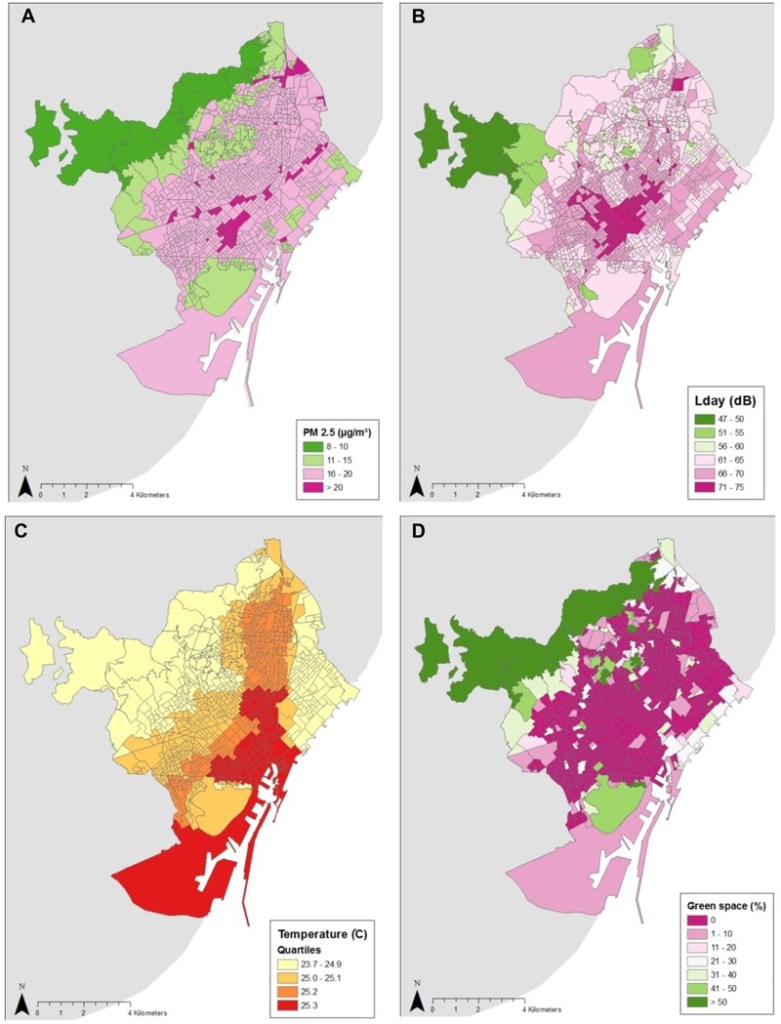
Environmental exposure maps of Barcelona at census-tract level (n=1,061): (A) air pollution, P.M2.5 annual mean; (B) daytime road traffic noise, LAqe,16hr (0700-2300 hours); (C) heat, daily mean temperature for 1 July 2011; (D) green spaces, green space surface in percent (GS%) of green spaces ≥ 0.5 ha.
Source: NCBI.

Both ambient (outdoor) and household (indoor) air pollution cause negative health impacts and can lead to cardiovascular or respiratory disease; a 2017 study found exposure levels in Barcelona lead to almost 3,000 preventable deaths per year. Air pollution and its health consequences are not felt equally across the city and tend to impact the those living in the most deprived areas the most; with those that gain the most from polluting activities often being impacted the least. In Barcelona, this is seen as areas with higher levels of ethnic groups face higher exposer to NO2 than the city’s general population. 

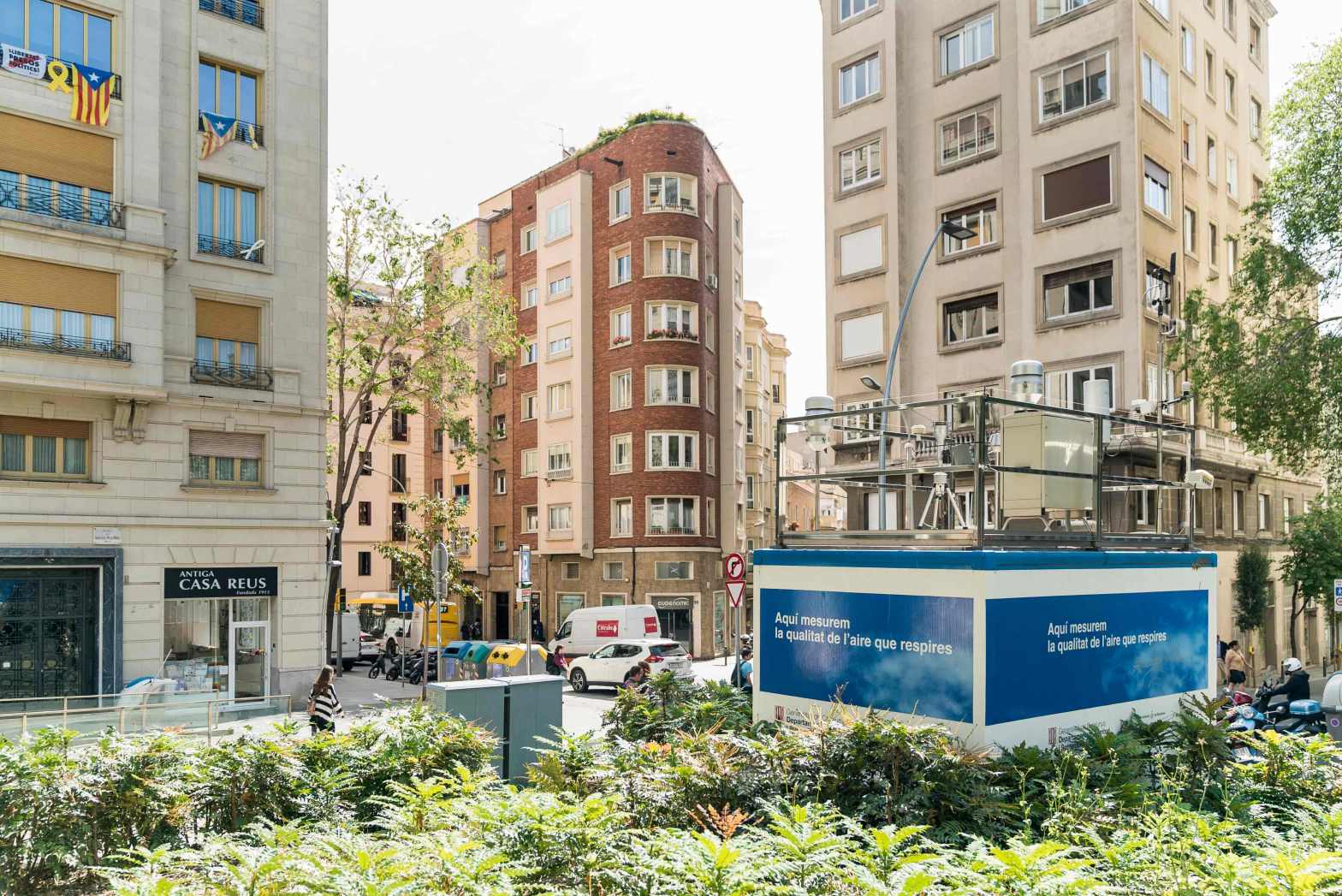
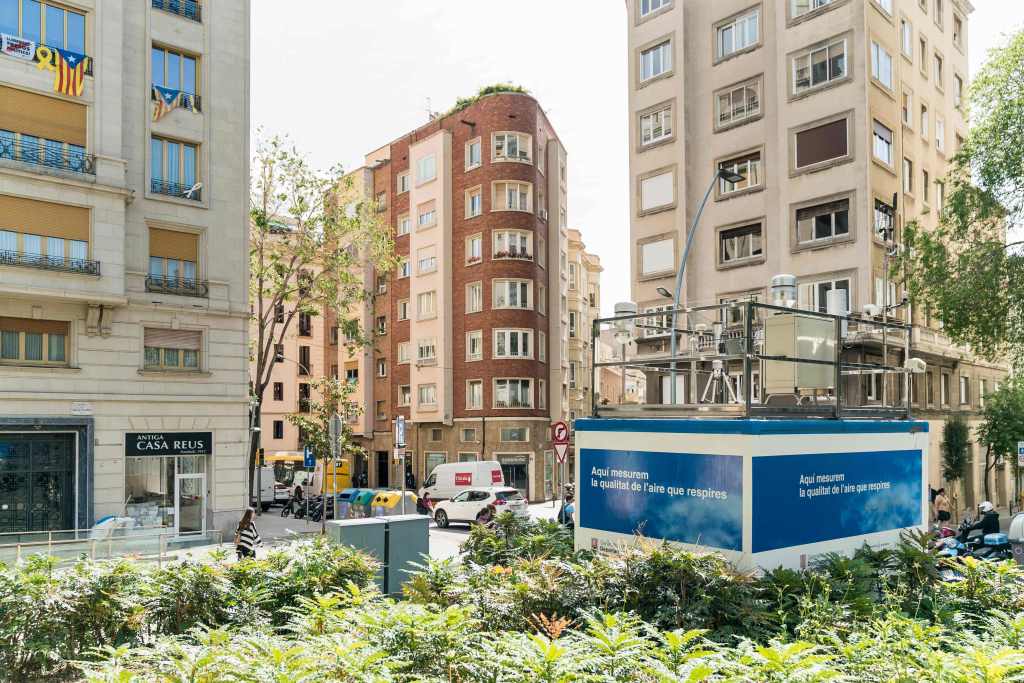
Despite this unequal distribution of air pollution across neighbourhoods, official monitoring systems in cities tend to be based on sparse networks of monitors, producing ‘baseline’ data that summarises the state of air quality in neighbourhoods or regions. This has been criticized by urban political ecologists, as these systems fail to capture localised human exposures to pollution. In Barcelona, 11 stations, monitoring over 10 pollutants, make up the Atmospheric Pollution Monitoring and Forecasting Network. The stations are in locations that represent different street categories (urban-area, suburban and traffic) in order to obtain data that can be extrapolated to other areas with similar urban conditions across the city.  

Air pollution monitoring station, Barcelona. Source: Ajuntament de Barcelona, Air Quality.

However, in Barcelona, CITISENSE is working to provide more thorough monitoring of the city’s air. The project is still in its planning stages, but will include both static sensors placed on balconies across the city, and portable sensors to be worn by volunteers for a period of one week to one month. Projects such as these that will provide a more accurate understanding of air pollution across the Barcelona may enable the city to make changes in the most polluted areas, readjusting the distribution between the previously mentioned ‘winners’ and ‘losers’ of air pollution.


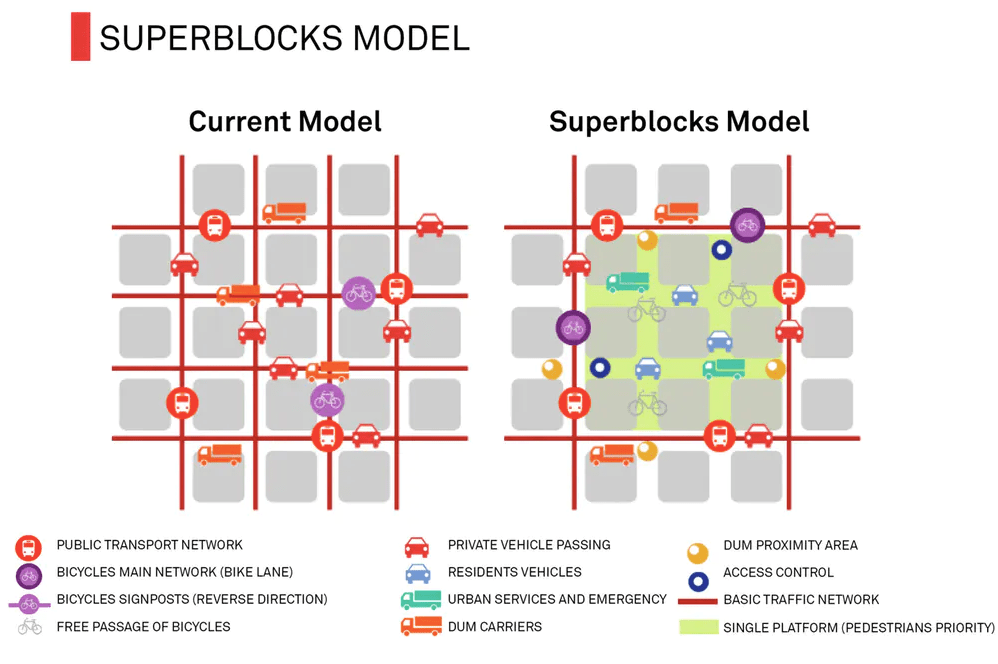
Urban residents are often responsible for creating the air that they breath, and the city of Barcelona is no exception to this. Urban and regional traffic are the biggest contributors to air pollution in the city, accounting for 48.2% of NOx and 61.6% of PM10 emissions. Over the past few years, the city council has been very active in introducing policies to reduce private vehicle use and promote public transport, cycling and walking in an effort to reduce air pollution. Most recently, as of 1 January 2020, the Barcelona Ring Roads LEZ has been introduced; an area of over 95kmwhere the most polluting vehicles are restricted, with the aim of reducing environmental and health problems associated with air pollution. The city’s innovative urban planning superblock policy is also intended to have a significant impact on air and noise pollution, with ambient levels of NO2 predicted to reduce by a 25% in superblock neighbourhoods. The policy creates ‘superblocks’ of nine city blocks where traffic is restricted to roads around the outside and streets are turned over to pedestrians and cyclists.  

Superblocks model explained. Source: Ajuntament de Barcelona, Urban Mobility Plan of Barcelona.

Air pollution in Barcelona is an element of city life that greatly impacts, and is impacted by, the behaviours and activities that occur within the city. Its effects are felt unevenly across the city, with winners and losers not reflecting responsibilities. Whilst this post has discussed improvements in monitoring systems and urban policies that are movements in the right direction, more action needs to be taken to make Barcelona a more equitable city in terms of air quality.  

Design a site like this with WordPress.com
Get started