What the smell?! Dandora Dumpsite

Sometimes it is only a short way from paradise to hell. The journey from Gigiri to Korogocho takes less than half an hour. Gigiri is one of the wealthiest districts of Nairobi. The United Nations has its headquarters here, the US Embassy is here, entrenched behind barbed wire and high walls. Jacaranda trees blossom in bright purple, the residences of the diplomats are surrounded by lush green, cultivated by a swarm of employees.

During my research stay in Nairobi, I drove from beautiful Girigi where I had an interview with UNICEF to the informal settlement Korogocho. The houses once built in Korogocho by the World Bank intending to provide cheap housing for the poorest people give the district a ‘better’ look than the corrugated iron huts of Kibera, Nairobi’s most famous informal settlement. But even in Korogocho, there are no paved streets and for most people, neither water nor electricity. And then there is Dandora, the garbage dumpsite, one of the most tremendous waste dumps in Africa. Have a look at the following video illustrating the dimension of Dandora dumpsite.

https://www.youtube.com/watch?v=2qJo6s0FQts&t=27s

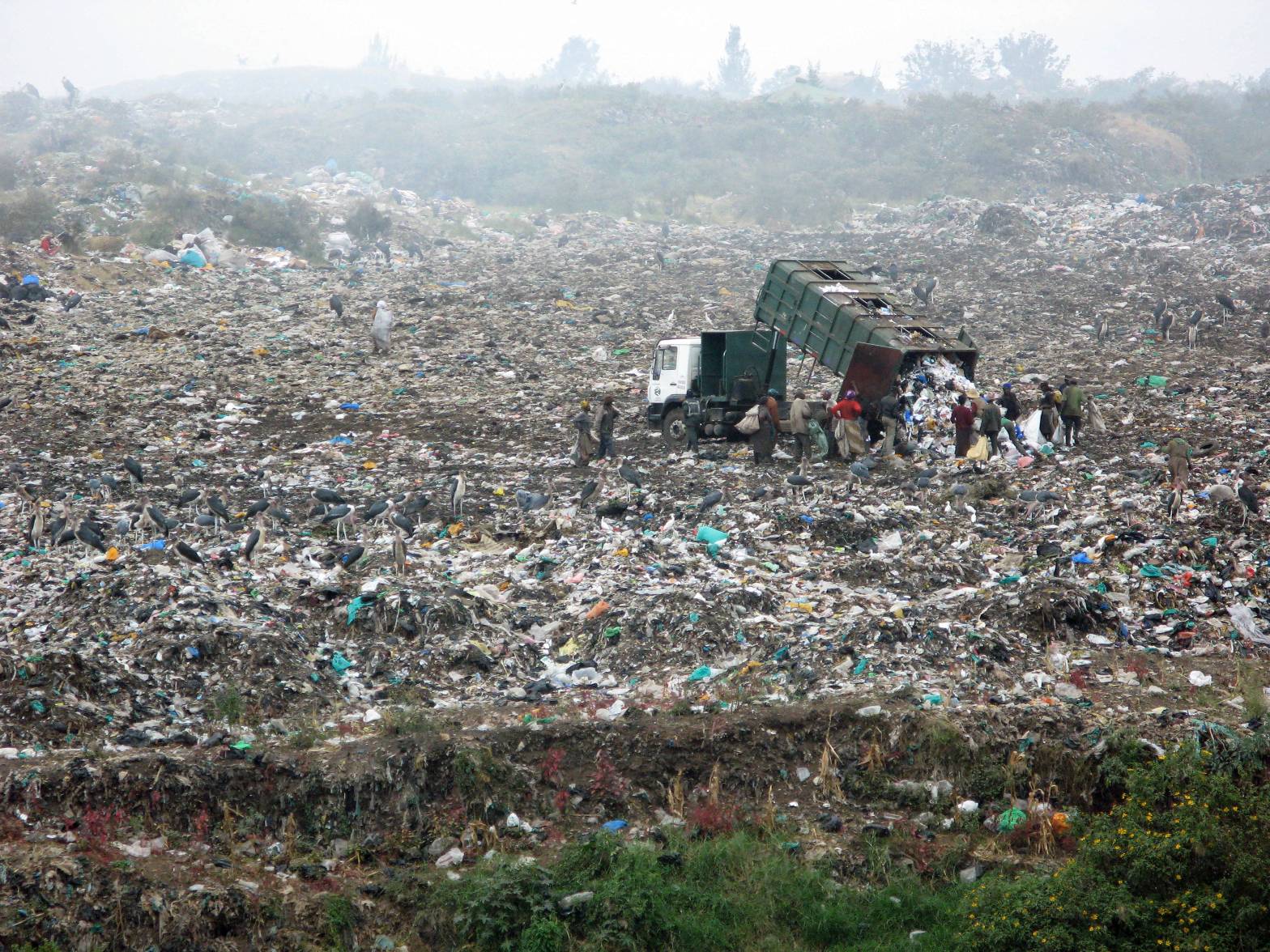
The view of Dandora dumpsite in Korogocho was a special event for me. In the valley basin, it glittered among the clouds of smoke of burning garbage. Goats and chickens scratched between plastic bags and rubbish. The few trees that stood between the dumps looked like mockery, a reminder of a more beautiful, greener world that has nothing to do with the reality in Korogocho.

With sticks and poles, hundreds of people, children and adults, poked at the garbage. They ignored the muddy, rotten ground in which they sank ankle-deep with their plastic sandals, the burning, acrid smoke that penetrated their eyes, nose and mouth, that made them dizzy after a short time.

Dandora dumpsite. Source: The Conversation, 2017

The ‘garbage people’ of Korogocho can’t pay attention to the smoke or the dirt, because for them it’s about their livelihood, about everything that can still be recycled and sold.

About 2000 tons of waste are transported to Dandora every day. This garbage of people from Nairobi’s more prosperous districts is both a livelihood and a curse. Residents of Korogocho live on the garbage, and they die of it, of the poison that is everywhere in air, water, and ground. Many children have chronic respiratory diseases, suffer from circulatory problems and have difficulty concentrating. The United Nations Environment Programme examined several hundred children in the area around Dandora. Half of the children had lead concentrations in their blood that were far above the international limits. Almost half of the children and adolescents examined suffered from respiratory diseases such as chronic bronchitis and asthma.

The soil samples taken in Dandora also showed alarming results. Almost half of them revealed heavy metal concentrations ten times higher than the permissible limits. The heavy metal cadmium, which, in too high levels, damages the organs and can lead to kidney failure and cancer, was measured at the soil surface in Dandora in 50-fold concentrations.

This is all the truer given environmental conditions that are hazardous to health. According to estimates by the World Health Organization (WHO), these risks are responsible for the death of 4.7 million people every year. In developing countries, one in four deaths is attributable such environmental conditions.

No one is as good at recycling as the urban poor. Everything is reused somehow. Reuse – a topic we will discuss later in the blog in the form of circular economies. But reuse must not mean that the lives of the poorest and their families are put at risk. With proper waste management, thousands of jobs could be created for residents of Nairobi’s informal settlements – jobs that can preserve human dignity and health. This is also about human rights and social justice. The lives of nearly a million people are at stake – and the people here are already poor and disadvantaged.

646 words

VISUAL REFERENCES

Featured Image: Kamau, R. (2017). Nairobi’s Dandora Dumpsite. Retrieved from http://nairobiwire.com/2017/11/what-sonko-plans-to-do-about-the-dandora-dump-site.html

The Conversation (2017). Nairobi’s Dandora Dumpsite. Retrieved from https://theconversation.com/it-will-take-more-than-good-intentions-to-clear-nairobis-garbage-mountains-88421
Welcome, the inequality starts here!

Karibu!

Welcome to Kenya, welcome to Nairobi and its informal settlements, and welcome to my blog! Over the next weeks, I will be providing an insight into topics around Urban Political Ecology (UPE) in Nairobi’s informal settlements. I have chosen to write about Nairobi’s informal settlements out of personal and academic reasons. When conducting my dissertation research on menstrual health in Nairobi’s informal settlements over six weeks in 2019, I have experienced that the citizens of informal settlements in Nairobi bear the brunt of environmental hazards surrounding water, air, waste, health, and housing. This has shocked and fascinated me equally.

From the academic perspective, Nairobi provides an exciting location as scholarship on UPE has focused on cities in Euro-America and Latin America. UPE studies on Africa have focused on rural areas’ natural resources and wildlife, thereby neglecting urban African regions. My focus on urban and informal Nairobi hence contributes to opening up new debates around UPE topics within urban geography.

Unequal City, Unequal Resources

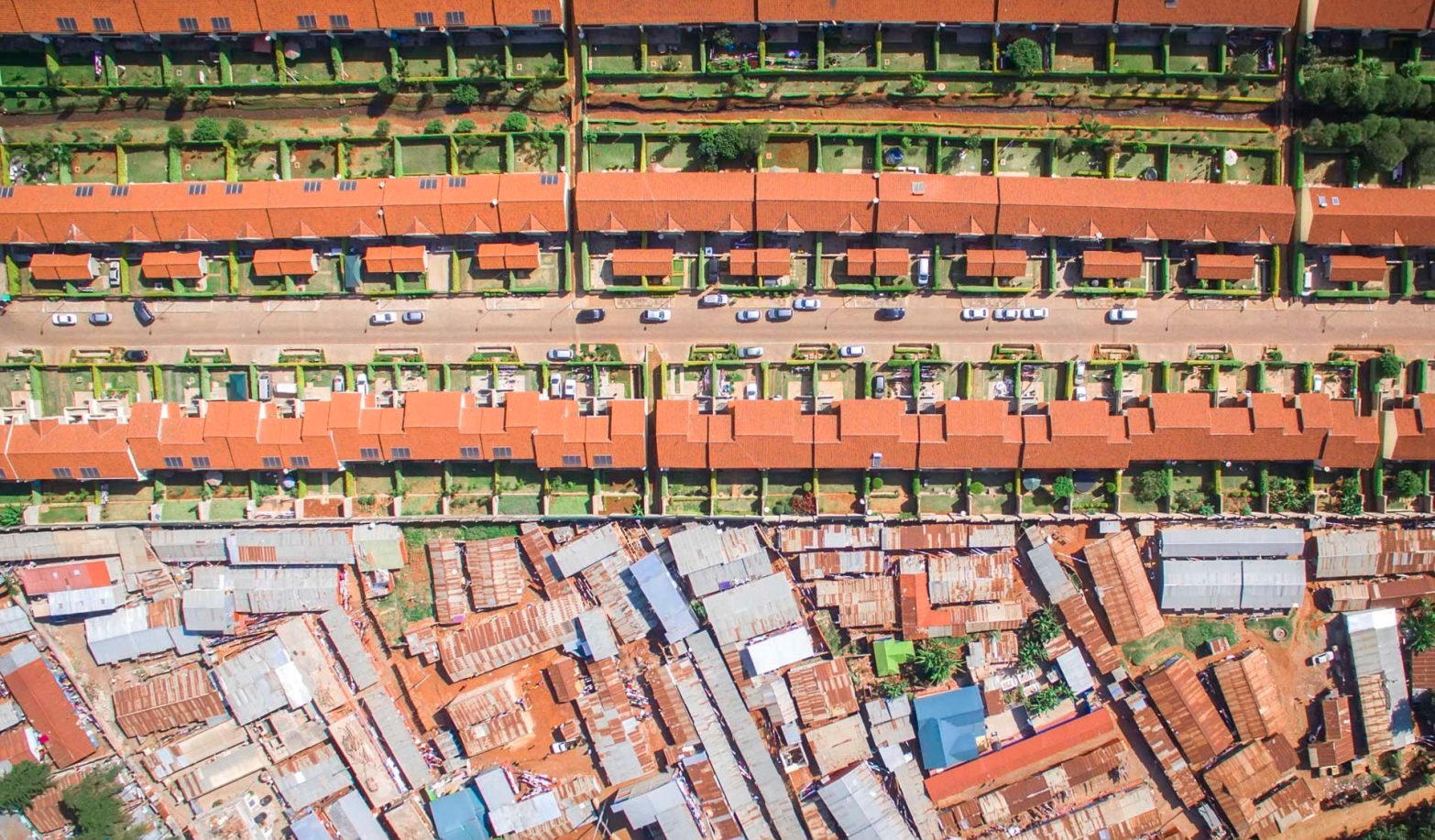
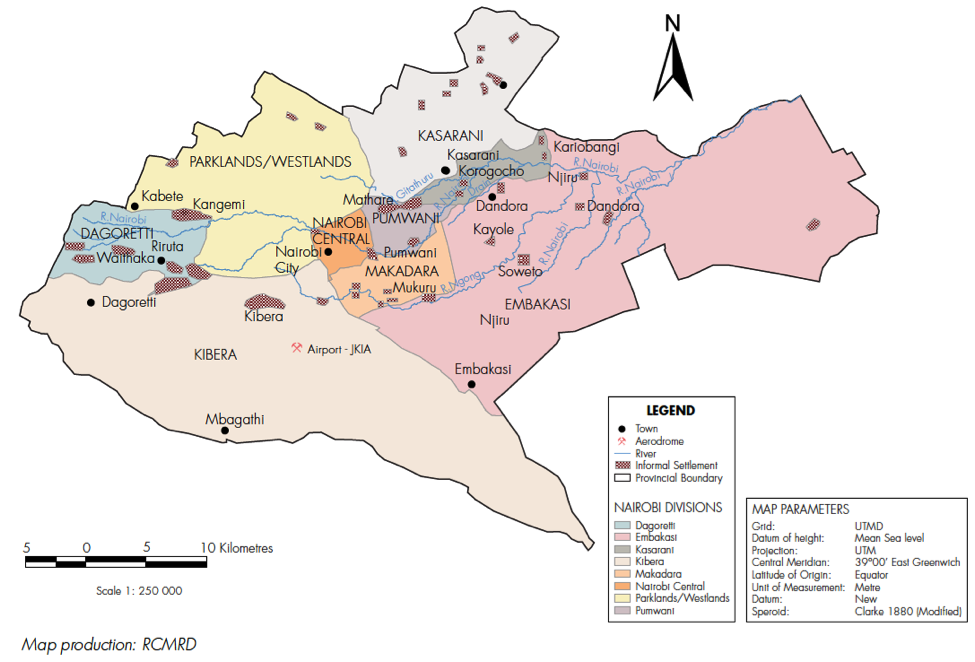
I focus my blog entries on informal settlements with them being particularly vulnerable to environmental injustices. Inequalities in Nairobi’s socio-spatial structure, access to resources, and environmental hazards are amongst others legacies of Nairobi’s colonial past. In 1923, segregation through sanitary regulation and the use of strict building codes took place in Nairobi. Africans had minimal housing and services, with only 1-2% of the city’s revenue being intended for services serving Africans. After independence, the city moved from race-based segregation under colonial rule into residential zones split into class and within a class, into ethnicity. Accordingly, the ‘unserved’ African settlements turned into living areas for migrants and the poor. Nairobi became a fully segregated city with one part being fully serviced residential areas and the other part constituting left-behind, informal and unplanned settlements. Nowadays, there are more than 150 informal settlements in Nairobi hosting 60-70% of Nairobi’s population, however, occupying only less than 5% of the city’s land area (Dianati et al., 2019). Below, you can see a map showing the locations of informal settlements in Nairobi.

Bildergebnis für Nairobi slums map
Distribution of Nairobi’s informal settlements. Source: United Nations Environmental Programme, 2009

The legacies of colonial land segregation are seen in the limited access to resources and services people face in Nairobi’s informal settlements, many of which I will explore in the coming weeks! Have a look at the video below to get an impression of how life in Nairobi’s informal settlements looks like. See you soon – Kwaheri!

https://www.youtube.com/watch?v=FEJtA8HD2rA&t=193s

401 words

LITERAL REFERENCES

Dianati, K., Zimmermann, N., Milner, J., Muindi, K., Ezeh, A., Chege, M., … & Davies, M. (2019). Household air pollution in Nairobi’s slums: A long-term policy evaluation using participatory system dynamics. Science of the Total Environment660, 1108-1134.

VISUAL REFERENCES

Featured image: Route to food (2018). Nairobi’s informal settlements from above. Retrieved from https://routetofood.org/food-justice-in-urban-informal-settlements/

United Nations Environmental Programme (2009). Nairobi’s informal settlements. Retrieved from https://www.uncclearn.org/sites/default/files/inventory/unep23.pdf

An introduction to Barcelona and the production of nature in Parc de Collserola

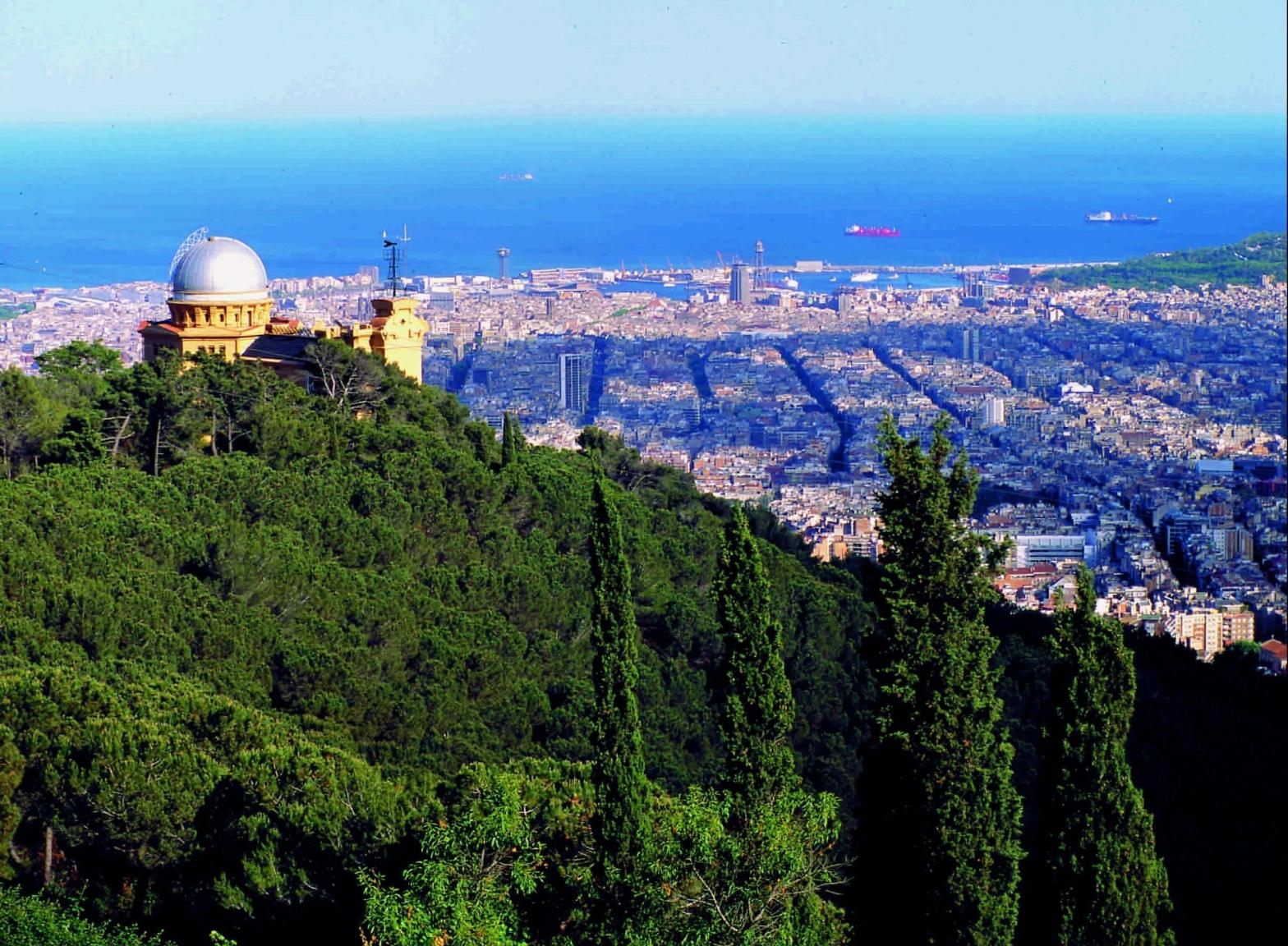
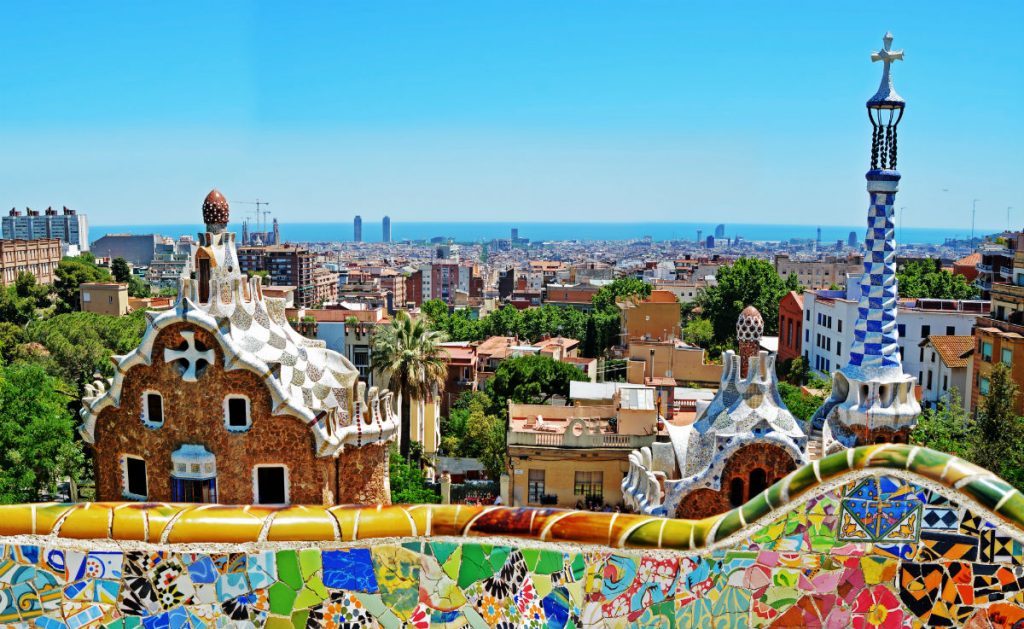
Barcelona is known for its architecture and culture and is one of the most liveable cities in Spain, popular with locals and tourists alike, due to the city’s beaches, green spaces and urban lifestyle. Its metropolitan region spans 636km2 and is home to a population of over 5.4 million people.

Source: Innovation Forum

The liveability of modern cities depends on urban ecosystems and the services they provide. Urban areas are reliant on ecosystems for a range of services that support human well-being and human health, such as reducing flood risk, water purification, air purification, urban cooling and providing space for recreation.

Following the notion that nature is socially constructed, the urban ecosystems that cities depend on have not simply emerged from nature but are co-produced by human activity – they are the outcome of historical, social, political and economic actions. Social practices, such as urban development and the day-to-day lives of city dwellers, impact and influence the benefits gained from ecosystem services, and also determine the distribution of these ecosystem services across society.

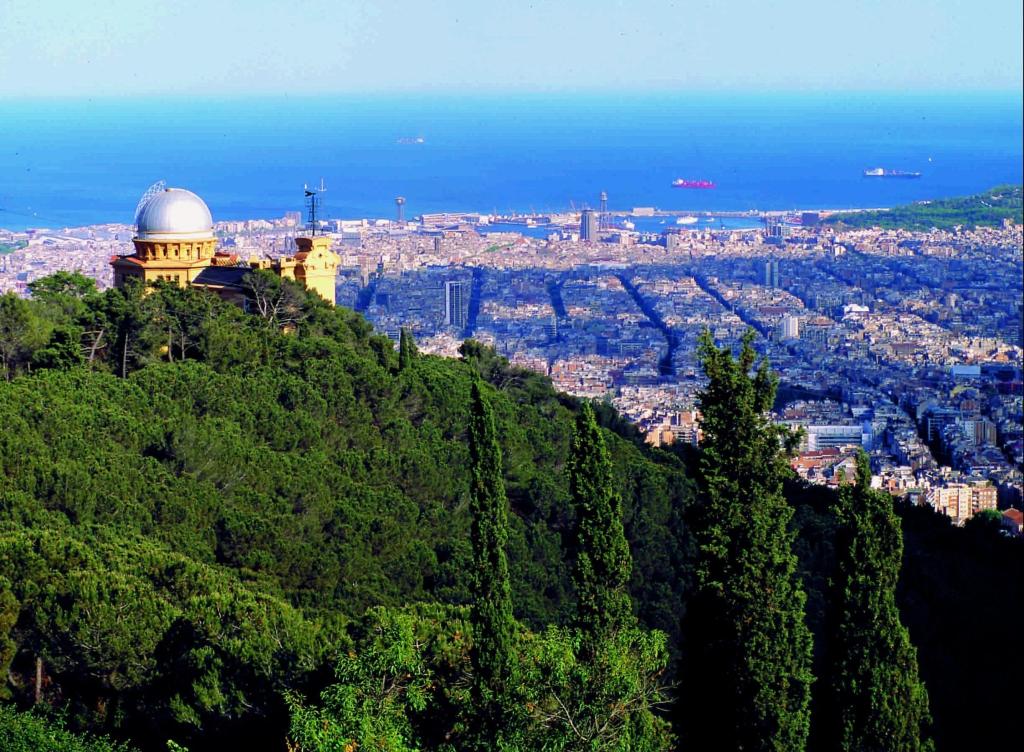
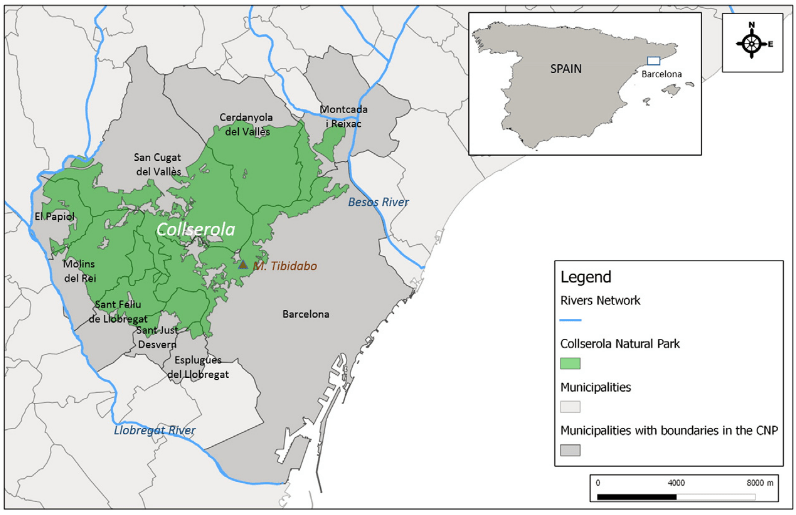
Like many cities around the world, Barcelona suffers from poor air quality and high temperatures due to the urban heat island (UHI) effect. The liveability of Barcelona is greatly improved by the ecosystem services the city receives from the Parc de Collserola, a mountain range to the north-west of the city, between the rivers Besòs and Liobregat.  

Source: MHikes

The park has not simply emerged from nature but is the outcome of centuries of human activity. Archaeological findings from the area suggest the land was used intermittently for agriculture between the 12th and 19th centuries. In the mid-19th century, the Collserola began to be used for leisure activities, and over the course of the 20th century, the urban population surrounding the Collserola grew, gradually encroaching on the open space. In 1987, following the approval of the General Metropolitan Plan in 1976, the Parc de Collserola was officially set up, covering 8,465 hectares and to be managed by the Barcelona Provincial Council.

Source: Depietri et al., 2016

The Parc de Collserola contributes to vital air cooling and purification for the city, as well as providing flood mitigation and supporting biodiversity. Whilst the park was created by human interaction with nature, the ecosystem services the park provides were not ‘produced’ by humans, but are attributable to the ecosystems and natural processes that occur within the park.

The creation of nature in the Parc de Collserola is just one example of how the urban environment of Barcelona has been produced and reproduced over time. Over the coming weeks, this blog will go on to explore the urban political ecology of Barcelona in more depth, exploring topics such as the management of its water supply, how its urban planning influences flows of people through the city, and the contradictions of Barcelona as a ‘smart city’.

Design a site like this with WordPress.com
Get started